

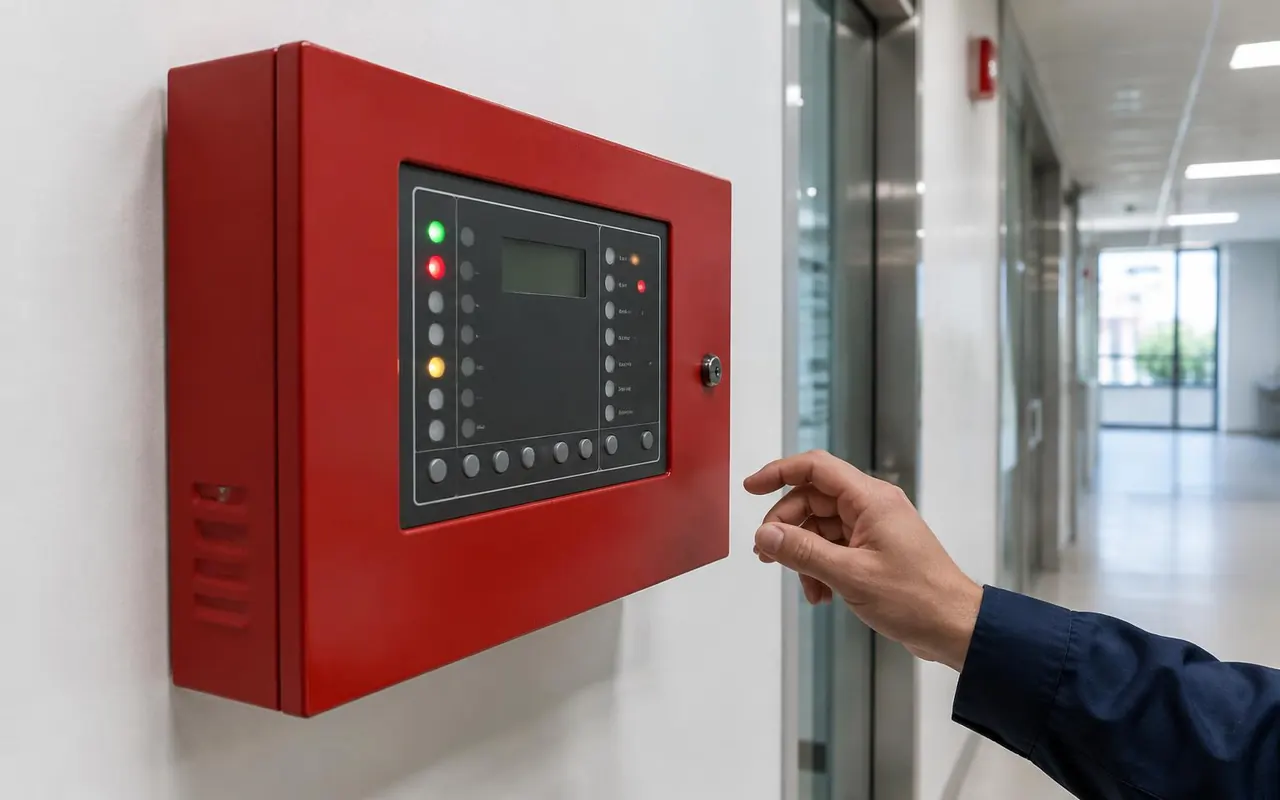
Every building needs an alarm that matches its size and use. A shop can manage with a simple zone panel. A tower or hospital needs to know the exact device in alarm. This hub explains how fire alarm systems differ, then points you to the right page for your city. Treat this page as your starting point for fire alarm systems.
Conventional or addressable
A conventional system groups detectors into zones and shows the zone in alarm. It costs less and suits small buildings. An addressable system gives every device its own address, so the panel names the exact detector and room.
Most towers, hospitals, hotels and large plants use addressable systems. Small shops, schools and offices often do well with conventional ones. Read the guides on conventional systems and addressable detection.
Choosing by building
Match the system to the building, not to a brand name:
- Small shops, offices and stores: conventional panels with floor-wise zones
- Mid-size offices, schools and hotels: compact addressable panels
- Large campuses, hospitals and plants: networked addressable panels with graphics
- Halls, warehouses and atriums: beam detection tied to the panel
- Kitchens and plant rooms: heat detection, not smoke detection
Testing and maintenance
A fire alarm needs a schedule. Batteries age, detectors collect dust and loops get isolated after false alarms. Weekly call point tests, quarterly device sampling and a yearly full test keep a system honest.
Our maintenance contracts put the schedule on a calendar and give written reports. See the pages on the Hyderabad fire safety AMC and the Visakhapatnam fire safety AMC.
Linking the alarm to other systems
A modern alarm does more than sound a hooter. It can bring lifts down, stop air handling units, release doors and start a voice message. It can also tell the CCTV system which camera to show.
These links are written into a cause-and-effect list and tested with each team before handover.
Who we work for
Builders, architects and MEP consultants can send us drawings and a specification, and we return a priced layout that matches it. Corporates and hospital owners get one team across sites and wings. Industries get designs matched to their hazards. Defence establishments, including Indian Navy and Army sites, can ask for a plan and quote, subject to their security and vendor-registration rules.
Fire alarm pages for Hyderabad
Readers in Hyderabad can use the pages below.
- Fire Alarm System in Hyderabad
- Conventional Fire Alarm System in Hyderabad
- Addressable Fire Alarm System in Hyderabad
- Bosch Fire Alarm System in Hyderabad
- Honeywell Morley Fire Alarm in Hyderabad
- Notifier Fire Alarm System in Hyderabad
- FireLite Fire Alarm in Hyderabad
- Ravel, Agni and Cooper Fire Alarm in Hyderabad
- Public Address System in Hyderabad
- Fire and CCTV Integration in Hyderabad
Fire alarm pages for Visakhapatnam
Readers in Visakhapatnam can use the pages below.
- Fire Alarm System in Visakhapatnam
- Conventional Fire Alarm System in Visakhapatnam
- Addressable Fire Alarm System in Visakhapatnam
- Bosch Fire Alarm System in Visakhapatnam
- Honeywell Morley Fire Alarm in Visakhapatnam
- Notifier Fire Alarm System in Visakhapatnam
- FireLite Fire Alarm in Visakhapatnam
- Ravel, Agni and Cooper Fire Alarm in Visakhapatnam
- Public Address System in Visakhapatnam
- Fire and CCTV Integration in Visakhapatnam
Fire alarm equipment guides
These pages explain the equipment in more detail.
Standards and approvals
Designs follow NBC 2016 Part 4 and IS 2189, using devices with EN 54 or UL listings as stated by the maker. The fire department decides what each building needs, and Essatech does not issue or promise approval.
How the work runs
- Send drawingsShare floor plans, building use and any panel already fitted.
- DesignWe pick the system type, mark devices and draft the cause-and-effect list.
- QuoteYou get an itemised quote.
- Install and testOur engineers fit, program and test every device.
- Hand overYou receive drawings, test records and a service plan.
What affects the price
- System type and panel size
- Number of devices
- Building height and area
- Cable route
- Battery backup
- Commissioning and service plan
What to send us
- Floor plans
- Building height and use
- Existing panel make and model
- Your deadline