

This page is part of our fire alarm systems range. Many panels we are asked to look at in Vizag show a fault light that nobody can clear. A fire alarm system in Visakhapatnam has to cope with salt air, monsoon damp and long cable runs, so we plan for those from the first drawing. We handle both conventional fire alarm panels and addressable fire detection, new or as upgrades.
Parts of a fire alarm system in Visakhapatnam buildings
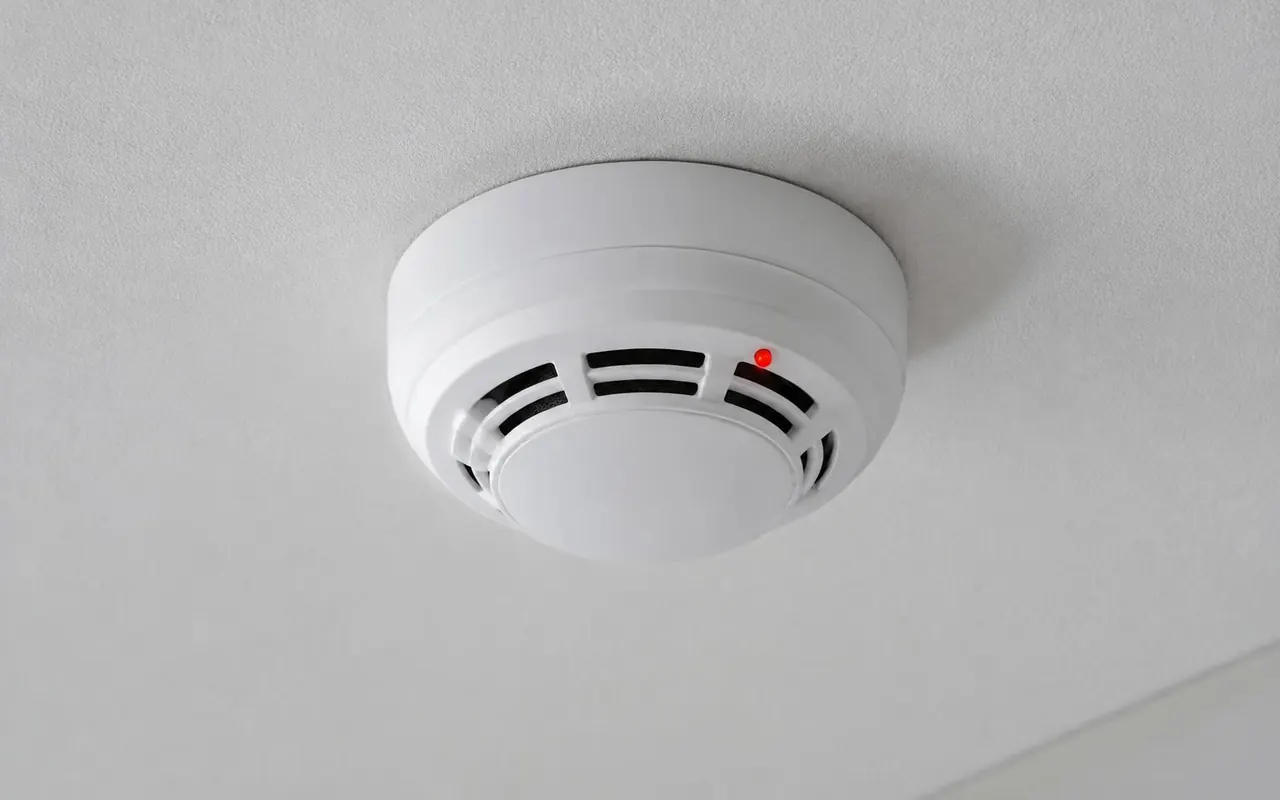
A fire alarm has five parts. Detectors sense smoke or heat. Manual call points let a person raise the alarm by breaking a glass or pressing a button. Hooters and strobes warn everyone in the building. The panel ties it all together and shows where the alarm started.
The fifth part is power. Every panel runs on mains supply with a standby battery that takes over in a power cut. In Vizag, where cyclone season can bring long power cuts, that battery matters. Most panels we are called to fix have standby batteries that nobody replaced after the third year.
Cabling is the part people forget. Fire alarm cable should be fire-survival rated, so the hooters keep working while the building burns. We run it in its own conduit, away from power cable, and label every junction box.
Conventional or addressable panel
A conventional panel splits the building into zones and tells you which zone is in alarm. An addressable panel gives every detector its own address, so the screen names the exact room. Small shops and offices usually suit conventional, while hotels, hospitals and towers suit addressable.
For a building with more than a few floors, the addressable panel usually pays for itself in faster fault finding. For a single shop, a two-zone or four-zone conventional panel is often enough.
- Point
- What the panel shows
- Conventional
- The zone in alarm
- Addressable
- The exact detector and room
- Point
- Suits
- Conventional
- Small offices, shops, single-floor units
- Addressable
- Hotels, hospitals, towers, campuses
- Point
- Wiring
- Conventional
- One cable run per zone
- Addressable
- Loops that carry many devices
- Point
- Fault finding
- Conventional
- Walk the zone to find the device
- Addressable
- Panel names the faulty device
- Point
- Upfront cost
- Conventional
- Lower
- Addressable
- Higher, with less cable on large sites
How we choose the detector type
Detector type comes from what burns in the room and what the air is like. Optical smoke detectors suit offices, guest rooms and corridors. Heat detectors suit kitchens, generator rooms and dusty stores, where smoke heads would give false alarms. Multi-sensor heads combine both and help in hotel rooms, where steam from a shower can fool a plain smoke detector.
Large spaces need other tools. A beam detector covers a warehouse or atrium with one transmitter and a reflector across the roof. Aspirating systems, often called VESDA type, pull air through a pipe to a sensitive detector and suit data rooms. Detector numbers come from the design, not from a rule of thumb per room.
What happens when a detector trips
The panel follows a cause-and-effect plan, a written list of what each alarm should switch. A typical plan sounds the hooters, sends lifts to the ground floor and shuts the air handling units so smoke is not pushed around. It also releases locked exit doors and signals the fire pump panel.
Getting this list right is half the job. We agree it with you and your consultant before wiring, then test every line of it at handover. In a hotel it often also starts a recorded evacuation message through the public address system. Where a fire sprinkler system in Vizag is fitted, its flow switches report to the same panel.
Faults we find on service visits
Old panels in Vizag fail in the same few ways. Standby batteries are dead or swollen. Detectors have been painted over during a renovation, so they cannot sense smoke at all. A loop or zone has been isolated to stop a nuisance alarm and never put back.
Near the coast we also see green corrosion on detector bases and terminals, and water in junction boxes after the monsoon. These faults stay hidden until someone tests the system. That is why a fire safety audit or a yearly fire safety AMC is worth the time.
Testing and handover
Before we hand over, every detector and call point on the loop is tested, and we check that the panel names it correctly. Hooter sound levels are measured in the rooms that matter, such as guest rooms and plant floors. Then we run the cause-and-effect test with your team watching.
You receive as-built drawings, the panel programme, test sheets and a short guide for the guard on what each light means. Keep these papers safe. The fire department may ask for them when you apply for or renew your NOC.
Fire alarms for Vizag hotels, hospitals and plants
Vizag has a mix of buildings, and each needs a different fire alarm system in Visakhapatnam. Hotels and resorts along Beach Road and at Rushikonda need addressable panels with guest-room detectors that ignore shower steam. Hospitals around Maharanipeta need staged alarms, so staff can move patients before a full evacuation.
Industry is the other half of the city. Port-linked warehouses and steel-linked units around Gajuwaka, and pharma plants at Parawada, need flameproof detectors in some areas and heat detection in dusty bays. Apartment blocks in MVP Colony and Madhurawada usually need a simpler conventional panel with a hooter on each floor.
Salt air and monsoon damp shorten the life of cheap detector bases and open cable joints. Near the coast we use sealed boxes and glanded entries, and we check earth and insulation readings at every service visit. The approving authority here is the Andhra Pradesh Fire Services Department, and building permission comes through GVMC or VMRDA.
Our head office at Suryabagh handles Vizag work directly, and the Visakhapatnam office page lists every service we offer in the city. We also install fire alarms in Hyderabad from our Gachibowli office.
Areas we serve. Not sure we cover your area? Call the office and ask.
- Rushikonda
- Maharanipeta
- Gajuwaka
- Parawada
- MVP Colony
- Madhurawada
- Suryabagh
Standards and approvals
Fire alarm design in India follows NBC 2016 Part 4 and IS 2189, the code for installing automatic fire detection and alarm systems. Panels and detectors should be listed to EN 54 or UL. Only the Andhra Pradesh Fire Services Department issues the NOC. We prepare your documents and get the systems ready, but we cannot promise approval. Our fire NOC consultant in Visakhapatnam page covers the paperwork side.
How the work runs
- Drawings and site visitSend your floor plans. An engineer visits to check ceiling heights, false ceilings, cable routes and where the panel and hooters can sit.
- Design and quoteDetectors, call points and hooters are marked on the drawing with a cause-and-effect plan. The quote lists every item, so you can compare it line by line.
- InstallationCable goes in first, then bases and devices after painting is done. That keeps paint and dust out of the detectors.
- Testing and commissioningWe program the panel, test each device and run the full cause-and-effect test with your team.
- Handover and serviceYou get drawings, test sheets and training for the guards. A yearly service contract can follow.
What affects the price
- Building height and floor area
- Number of zones or loops
- Detector and call-point count from the design
- Conventional or addressable panel
- Cable and conduit route, including false ceilings
- Battery backup time
- Commissioning and NOC support
What to send us
- Floor plans in PDF or CAD
- Building height and use
- Make and model of any existing panel
- Whether the fire NOC is pending
- Your deadline