

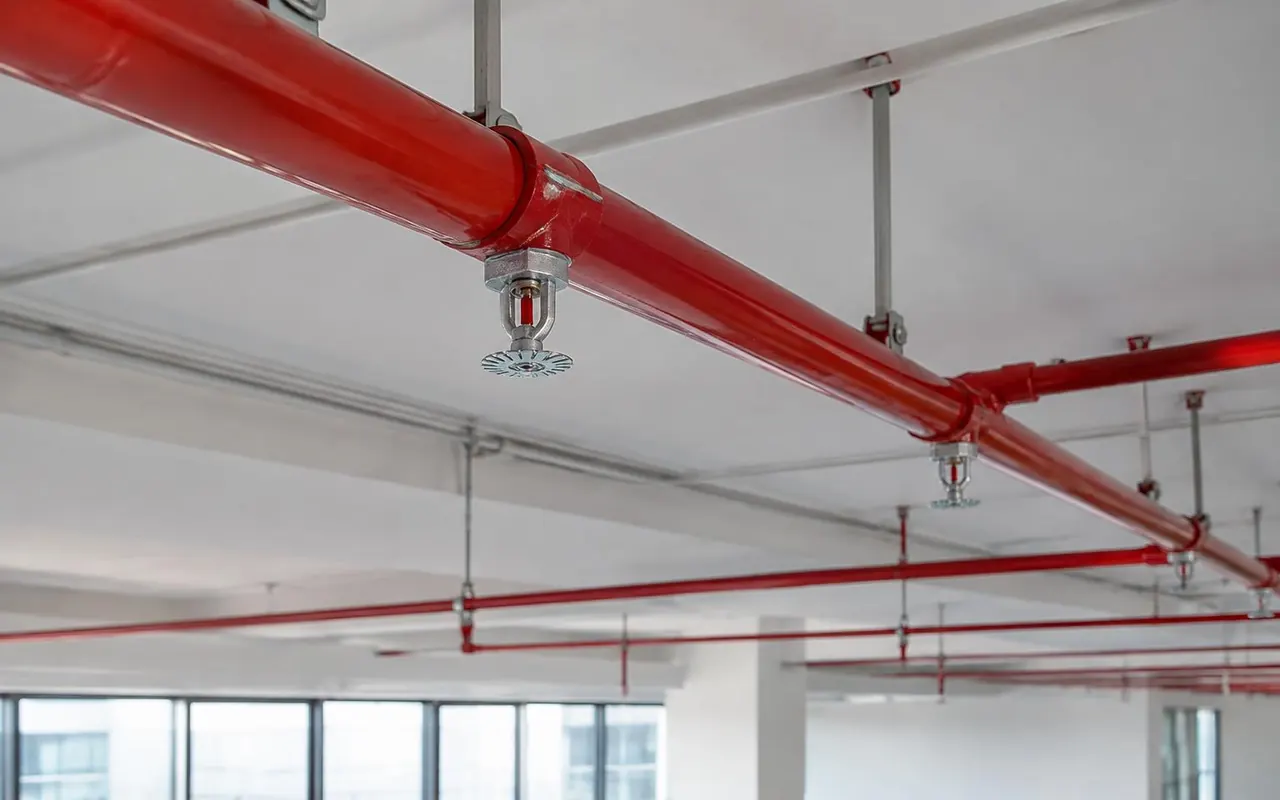
This page is part of our turnkey fire fighting projects range. The biggest myth about sprinklers is that one fire sets off every head in the building. It does not. Each head has a glass bulb or fusible link that breaks only when the air around it gets hot, so water falls only where the fire is. A fire sprinkler system in Visakhapatnam is designed around that fact, room by room. On most sites it shares water and pumps with the fire hydrant system.
How a sprinkler head works
A standard head holds back water with a small glass bulb filled with liquid. When the ceiling gets hot enough, the liquid expands, the bulb bursts and the head opens. Most rooms use heads rated at 68 °C, shown by a red bulb. Kitchens and boiler rooms need higher ratings so they do not open on normal heat.
Head type follows the ceiling. Pendent heads hang down from a false ceiling, upright heads point up from exposed pipe, and sidewall heads suit hotel rooms and corridors. Concealed heads sit behind a flat cover plate that drops away in a fire, which hotels and offices often prefer.
Wet pipe, dry pipe, pre-action or deluge
Most buildings use a wet pipe system, with water in the pipes all the time. The other types exist for rooms where water in the pipe is a risk, or where a fire spreads too fast for single heads.
In Vizag, dry pipe systems are rare outside cold storage. Pre-action is common in data and control rooms, where an accidental leak would cost more than the system. Where water damage is the main worry, a water mist system uses far less water.
- System
- Wet pipe
- How it works
- Pipes always full; a head opens and water flows at once
- Where we use it
- Offices, hotels, malls, apartments, basements
- System
- Dry pipe
- How it works
- Pipes hold air; water enters when a head opens
- Where we use it
- Cold stores and areas where pipes could freeze
- System
- Pre-action
- How it works
- A detector must trip before water enters the pipes
- Where we use it
- Data rooms, archives, control rooms
- System
- Deluge
- How it works
- Open nozzles; the whole zone sprays when detection trips
- Where we use it
- Transformer yards, fuel and chemical areas
Head types for warehouses and high racks
Tall warehouses need their own design. Standard heads at the roof may not reach a fire deep inside a rack 10 metres high. ESFR heads, short for early suppression fast response, deliver large drops at high flow and can protect many racked stores from the roof alone. Some stores still need in-rack heads.
ESFR design is strict about rack height, storage type, roof height and obstructions like lights and ducts. If you change your storage later, ask us to check the design again before you stack higher.
Hazard class and why it changes the design
Codes sort buildings into light, ordinary and high hazard. Offices and hotel rooms are usually light hazard. Car parks, shops and many factories fall in ordinary hazard, and stores of plastics or flammable goods can be high hazard.
The class sets the water density, the area of operation, the head spacing and how long the water supply must last. A wrong class on the drawing is expensive to fix later, so we confirm it with you and your architect at the start.
Water supply for a fire sprinkler system in Visakhapatnam
Sprinklers need a tank and pumps, often shared with the hydrants. Each zone has a control valve and an alarm valve that rings a water-driven gong when water flows. A flow switch on each floor tells the fire alarm system where the water is moving. Our fire pump house page covers the pumps in more detail.
Locked-open valves are worth the small cost of a chain and padlock. A closed control valve is one of the main reasons a sprinkler system fails in a real fire.
What we check in an annual sprinkler service
A yearly service covers the pumps, the alarm valves and gongs, the flow switches and a sample of heads. We open the test valve at the far end of each zone to prove water flows and the alarm rings. Heads that have been painted, bent, blocked by new ducts or hung with cables are noted.
Painted or corroded heads must be replaced, not cleaned. Rack layouts that have changed since the design are flagged for review. A fire safety audit covers sprinklers along with the rest of your fire systems.
Sprinkler systems for Vizag hotels, malls and port warehouses
Hotels and resorts on Beach Road and at Rushikonda need concealed or sidewall heads that suit guest rooms and lobbies. Malls and multiplexes need basement car park sprinklers, and shop fit-out changes checked often. Port warehouses and logistics stores around Gajuwaka and Duvvada need high-rack designs and large pump rooms.
The wet coastal air is hard on sprinklers. We see heads with green deposits on the frame and rust at pipe threads after a few monsoons, mainly in basements and on terraces. Corroded heads may open late or not at all, so we check them closely at every visit.
A fire sprinkler system in Visakhapatnam is inspected by the Andhra Pradesh Fire Services Department as part of the fire NOC, with building permission through GVMC or VMRDA. Our fire NOC consultant in Visakhapatnam service prepares that file.
Vizag projects run from our Suryabagh head office, and the Visakhapatnam office page lists every service we offer here. We also install sprinklers in Hyderabad.
Areas we serve. Not sure we cover your area? Call the office and ask.
- Rushikonda
- Gajuwaka
- Duvvada
- Siripuram
- Dwaraka Nagar
- Madhurawada
Standards and approvals
Sprinkler design follows NBC 2016 Part 4 and IS 15105, the code for design and installation of sprinkler systems, with NFPA 13 as a reference. Only the fire department issues the NOC. We prepare your documents and get the system ready, but we cannot promise approval.
How the work runs
- Drawings and hazard reviewWe study your plans, agree the hazard class for each area and check ceiling heights, racks and false ceilings on site.
- Hydraulic designPipe sizes, head positions and pump duty come from a hydraulic calculation for the worst area of the building.
- CoordinationSprinkler pipe runs are checked against ducts, lights and cable trays before work starts, so heads are not blocked later.
- Installation and testingPipework is pressure tested before ceilings close, then heads are fitted and each zone is flow tested.
- HandoverYou receive as-built drawings, test reports and spare heads, plus a short guide for your maintenance team.
What affects the price
- Building height and floor area
- Hazard class of each area
- Water source, tank size and pump duty
- System type, whether wet, dry, pre-action or deluge
- Number and type of heads, including concealed or ESFR
- Pipe size, material and route around ducts and ceilings
- Approvals and testing
What to send us
- Floor plans and sections
- Building height and use
- Storage type and rack heights for warehouses
- Water storage and supply details
- Details of any existing fire system
- Fire department letters, if any, and your deadline