

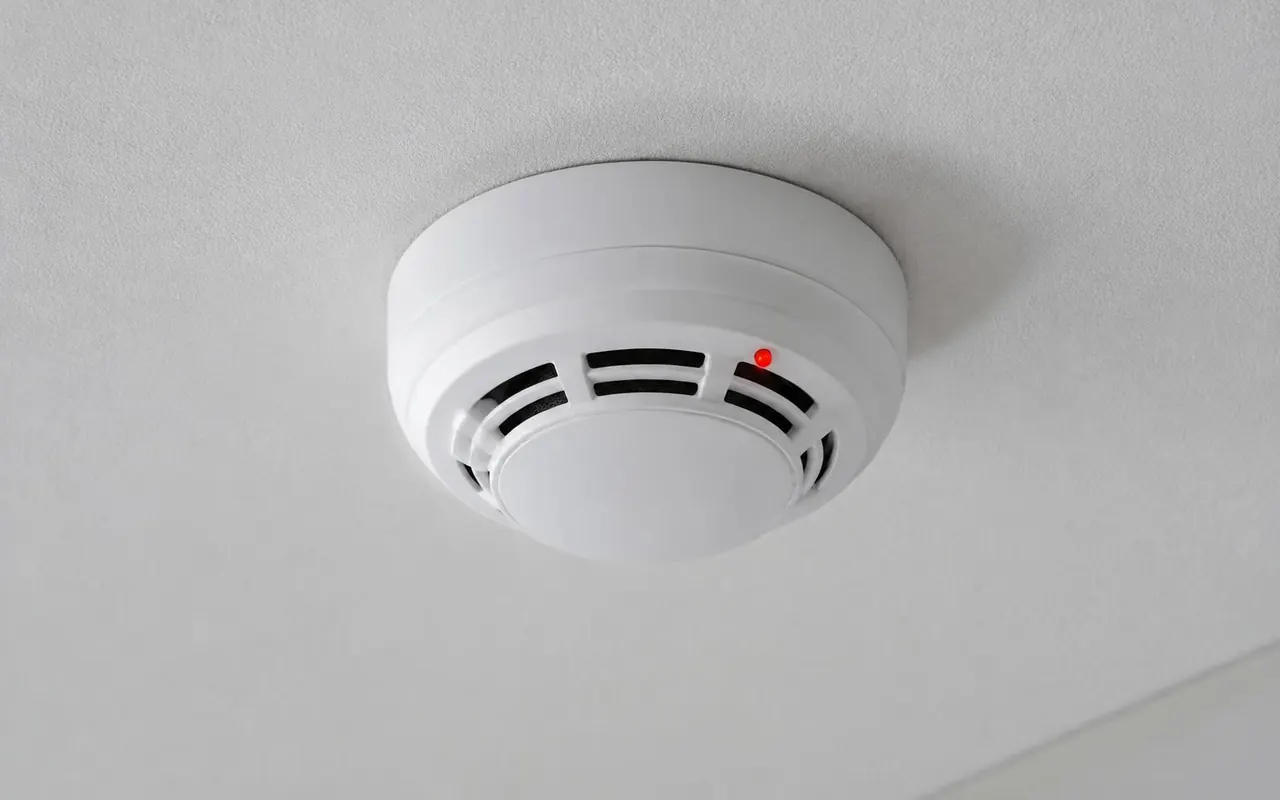
Why these rooms need heat detection
A heat detector raises the alarm when the air around it gets hot, not when it fills with smoke. Cooking steam, boiler exhaust and vehicle fumes look like smoke to an optical detector but do not heat the air to fire levels, so heat detectors stay quiet until there is a real fire.
Two types are common. A fixed-temperature detector operates when the air reaches a set value. The electrically connected model described here operates at 58°C, and other ratings suit hotter rooms. A rate-of-rise detector reacts to a fast climb of about 12 to 15°F (6.7 to 8.3°C), so it responds sooner to a growing fire. Many heads combine both and report to your fire alarm panel.
Rooms we fit heat detectors in
These are the places where we normally recommend heat detection:
- Restaurant, hotel and canteen kitchens
- Pantries on office floors
- Boiler houses and hot water plant rooms
- Generator rooms and DG set enclosures
- Basement and multi-level car parks
- Loading bays, workshops and dusty industrial sheds
- Laundry and drying rooms
- Food courts and service corridors in shopping malls
What you get from Essatech
Kitchens and plant rooms vary a lot, so we start by looking at them. The job includes:
- A free site visit to see each room, its ceiling and what runs inside it
- The detector type and temperature rating chosen for each room
- Supply, installation and wiring to your panel
- A test of every head with a heat tester, with the alarm checked on the panel
- Maintenance visits, if you want them
Getting the rating right
A head rated too low alarms on a hot afternoon, and one rated too high responds late. A common rule is to choose a rating at least 11°C above the highest temperature the room normally reaches, so we ask for the normal peak temperature of each room. Where temperatures swing, near ovens and generator exhausts, we choose fixed-temperature heads. Where a room stays steady, rate-of-rise heads respond faster.
In kitchens we keep heads clear of the cooking hob and the extract hood, where direct blasts of heat would cause false alarms. Pair them with smoke detectors in the offices and corridors around, or with multi-sensor detectors where you want both signals.
For builders, architects, MEP consultants, corporates, industries, hospitals and defence
Builders and architects should show kitchens, plant rooms and car parks on the detector schedule early, because these rooms need heat detection, not smoke. Industries use heat detectors in boiler houses, generator rooms and dusty sheds. Commercial building owners fit them in canteens and basements. Hospital owners fit them in kitchens, laundries and generator rooms, so steam and fumes do not set off alarms across a ward block. MEP consultants can pass us the kitchen, plant and DG room schedules for a rated heat head layout. Corporates use them in cafeterias and pantries. Defence establishments, including Navy and Army sites, use them in mess kitchens, boiler houses and generator rooms, and we quote within their security and vendor rules.
What decides the cost
A heat detector covers a smaller floor area than a smoke detector, so the same room needs more heads. The total depends on four things:
- The number of heads, which follows room area and ceiling height
- The type and temperature rating
- Panel type and cable length
- Access to ceilings in tall or crowded kitchens and plant rooms
What to send us for a quote
Share these through our quote page or on WhatsApp:
- A list of rooms with approximate sizes
- The equipment in each room, such as ovens, boilers or generators
- Normal peak temperature, if you know it
- Make and model of your existing panel, if any
- Photos of the ceilings, plus your location and target date
Heat detection in Hyderabad and Visakhapatnam
Restaurant and hotel kitchens, generator rooms and basement car parks are the typical jobs in Hyderabad, in areas such as Banjara Hills, Jubilee Hills and Hitech City. In Visakhapatnam the same room types appear in Dwaraka Nagar, MVP Colony and Madhurawada, along with workshops and sheds near Gajuwaka. We also supply temperature sensors, thermal sensors and fire alarm circuits. Contact the nearest office to book a visit.
Talk to our local team
Share your location, type of building and what you need. We will suggest the right equipment and explain installation and maintenance.