

We start with the protected hazard and your operating conditions. Send current drawings and the relevant equipment details so we can agree the survey and work scope. Existing protection and site access are reviewed before any installation or test is planned.
Detect sparks before they reach a dust collector
Sparks can travel with extracted dust from cutting, grinding or drying equipment. A dust collector concentrates material that can burn, so detecting an ember upstream has a different purpose from detecting smoke in a room. The material and process determine whether optical spark detection is appropriate.
A spark detection system in Hyderabad sits within our specialist suppression work. We review the dust and ignition hazard before choosing a response. It does not replace housekeeping, process temperature control or an engineered combustible-dust assessment.
Detector and nozzle positions depend on transport time
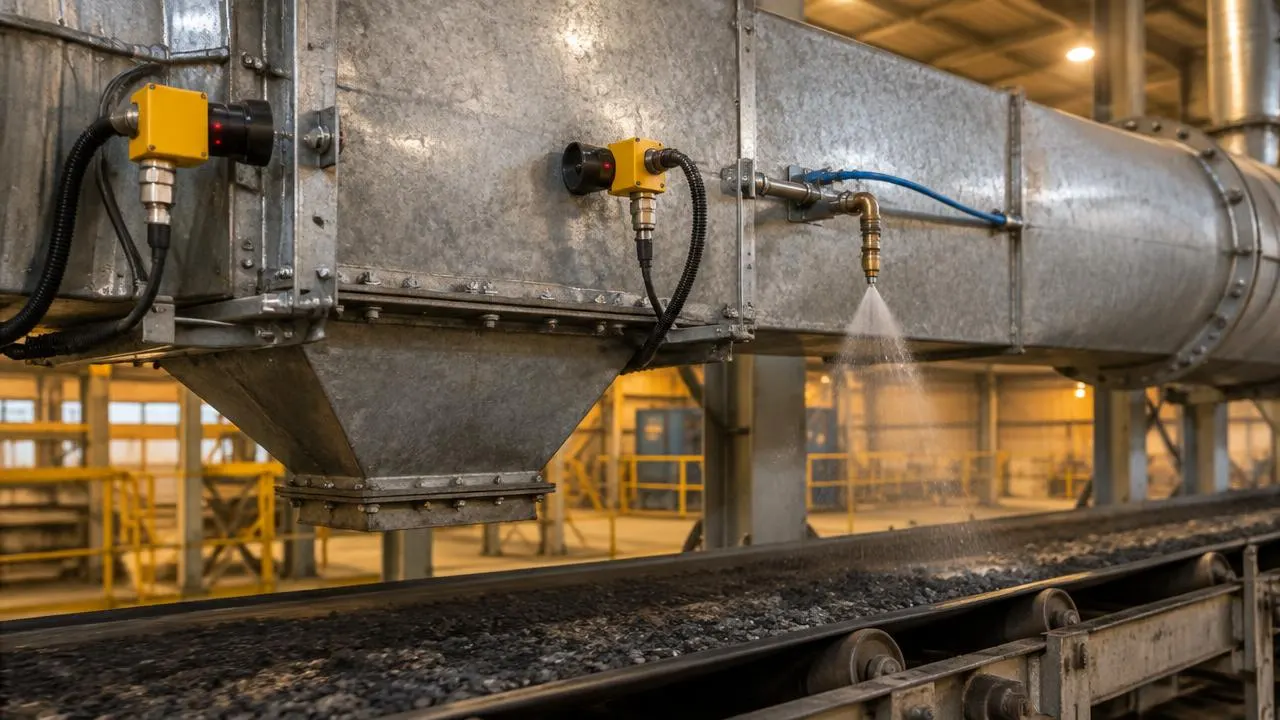
An optical detector identifies radiation from a hot particle. The control unit can command water nozzles, a diverter or shutdown equipment, depending on the approved design. Ambient light, dirty lenses, duct size and particle speed all affect selection and maintenance.
Enough distance is needed between detection and extinguishing for the control response to occur before the particle arrives. That distance comes from transport speed and equipment response, not a fixed spacing used on every duct. Bends, branches and inspection openings must appear on the drawing.
Water supply and process compatibility
A water extinguishing section needs the specified flow, pressure and nozzle arrangement. Supervision should identify a water fault rather than leaving an apparently healthy detector without a working response. Filters, valves and winter or outdoor conditions also belong in the design review.
Water is not suitable for every product or process. We check material compatibility and discuss diversion or shutdown where extinguishing water could introduce another hazard. Our water mist service is a separate application; its nozzle selection cannot simply be copied into a dust duct.
Shutdown is not explosion isolation
A stop command can limit further material feeding but cannot be assumed to stop an explosion already propagating. Explosion venting, isolation and containment are separate engineering decisions. A spark system must be coordinated with those measures and with the machine supplier.
We record what each alarm does, who resets the system and how the process restarts. Our industrial fire alarm work can support building notification, while fire suppression maintenance covers the agreed inspection scope.
Spark detection system in Hyderabad plants
Engineering and manufacturing sites around Jeedimetla and Patancheru can have extraction ducts above machines, while warehouses near Shamshabad may contain conveying equipment. These are examples of hazards to assess, not claims that every facility needs spark suppression.
Send the extraction drawing, material description and operating airflow before a survey. In pharma or food production, contamination and water compatibility deserve attention alongside ignition control. For enclosed cutting machinery, our CNC suppression page explains a different local-protection approach.
Site planning in Hyderabad
Work in Hyderabad is planned around safe access, isolation and your operating hours. Tell us who manages permits and any landlord interfaces before attendance. We agree the survey and fitting sequence with your team; no unconfirmed response time or installation deadline is promised.
Areas we serve. Not sure we cover your area? Call the office and ask.
- Gachibowli
- Madhapur
- Jeedimetla
Standards and approvals
The applicable standard, manufacturer manual and consultant requirements must match the selected hazard and equipment. We check model-specific approval evidence where required. In Hyderabad, the Telangana State Disaster Response & Fire Services Department issues the fire NOC. Essatech does not issue or guarantee government approval.
How the work runs
- Send the site detailsShare drawings, hazard information and existing equipment details. We identify missing information before setting a survey scope.
- Review and proposeWe review the layout, interfaces and safety requirements, then record equipment and work responsibilities in the proposal.
- Install or testThe agreed work follows a site access and isolation plan. Interfaces are checked with the responsible contractors.
- Hand over recordsWe explain the operating arrangement, report findings and agree the maintenance or remedial work required.
What affects the price
- Protected hazard and equipment selection
- Access, installation routes and control interfaces
- Survey, testing and agreed aftercare scope
What to send us
- Current drawings and the exact site location
- Hazard, fuel or agent information relevant to the work
- Existing equipment models and consultant requirements
- Access restrictions and your preferred work window