

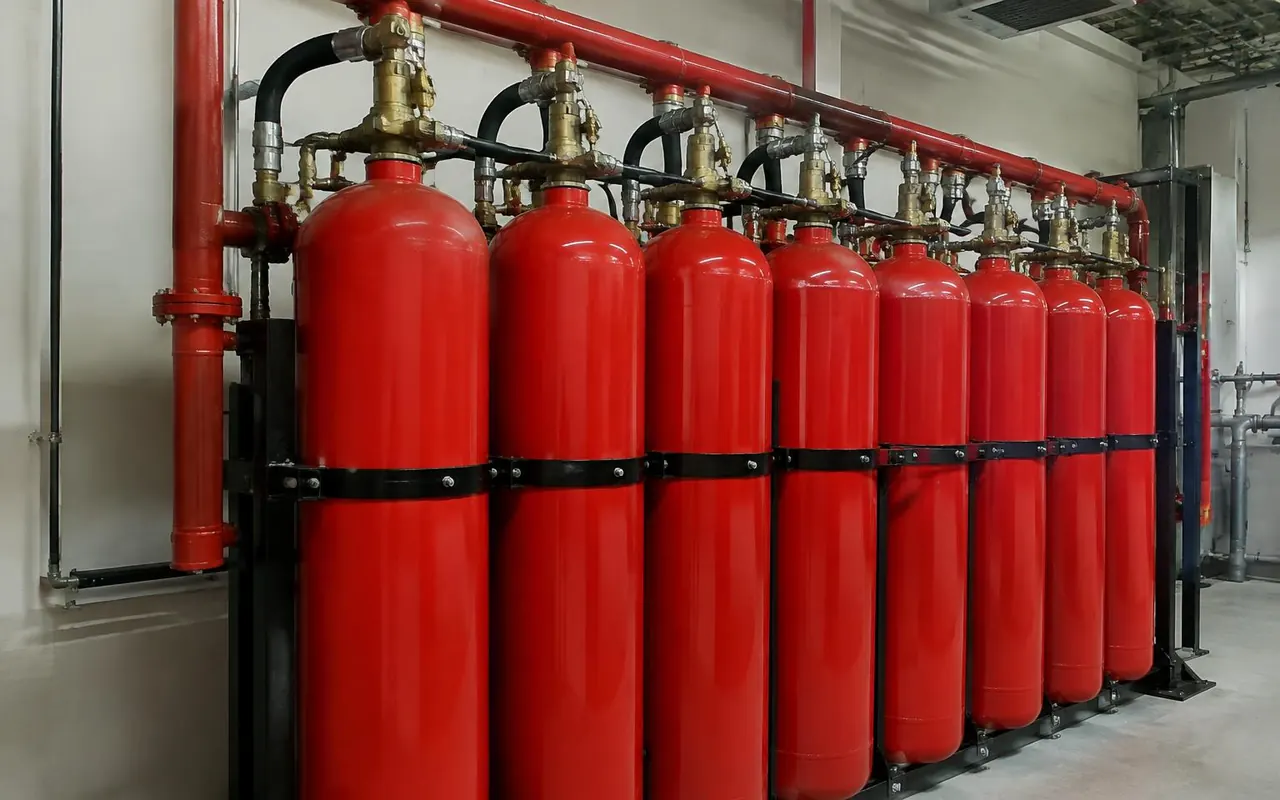
A suppression system may sit idle for years, then must work in seconds. Slow leaks, a drifted gauge, a blocked nozzle or a new gap in the wall can all stop it. A fire suppression system AMC in Hyderabad finds these faults before the day of a fire.
This fire suppression system AMC in Hyderabad covers suppression systems only. For extinguishers, alarms and hydrants across a building, see our general fire safety AMC page.
What each visit covers
The scope depends on the system, but the checks below form the core. Frequencies follow the standard and the maker's manual.
- Check
- Agent quantity and cylinder pressure
- How often
- Every six months
- Check
- CO2 cylinder weighing
- How often
- Every six months
- Check
- Detection and release panel test
- How often
- Every visit
- Check
- Actuator and solenoid check without discharge
- How often
- Every visit
- Check
- Nozzle and pipe inspection
- How often
- Every visit
- Check
- Enclosure and room review
- How often
- At least once a year
- Check
- Room integrity test
- How often
- When the room changes
- Check
- Cylinder hydrostatic test
- How often
- As the cylinder rules require
Agent and pressure checks
NFPA 2001 calls for agent quantity and pressure checks at least every six months. A halocarbon cylinder that has lost more than 5 percent of its agent, or 10 percent of its pressure after adjusting for temperature, should be refilled or replaced. Our engineers record each reading against the nameplate under the fire suppression system AMC in Hyderabad.
CO2 cylinders cannot be judged by a gauge, so we weigh them. A loss of weight shows that gas has escaped. This applies to your CO2 flooding rooms, and also to FM200 refilling in Hyderabad when a cylinder falls below the limit.
Testing release without discharging
We test detectors, the panel, alarms, time delay and abort switch. For the release path, we disconnect or isolate the actuator so the cylinder cannot fire, then confirm that the signal arrives. The valve is checked and put back in service, and the lock-off is removed before we leave.
Nozzles and pipes are inspected for blockage, damage and loose fixings. A pipe knocked during building work can change how the gas spreads.
Room integrity and changes
A room that held gas when it was handed over may not do so now. New cabling, moved partitions and extra ducts all open gaps. We review the enclosure each year and repeat the room integrity test when something has changed. A clean agent room that fails the test is sealed and tested again.
Kitchen and tube systems
A kitchen hood system is checked for nozzle caps, fusible links, the gas shut-off valve and the wet chemical level. Greasy duct and hood cleaning is a separate job, but we point out buildup.
A tube based system is checked for tube condition, gauge pressure and mounting. Tubes that are aged or damaged are replaced.
Recharge, testing and records
After any discharge, the system must be recharged and checked before the room is trusted again. We arrange refilling and periodic hydrostatic testing as the cylinder rules require, and PESO covers the cylinders in India. Each visit ends with a written report that lists readings, faults and actions.
These reports help with insurer reviews and with inspections by the fire department. If your last audit raised points, our fire safety audit can place suppression checks alongside the rest of the building.
Taking over systems fitted by others
We survey the system first. We read the drawings if they exist, check each cylinder and the panel, and list any fault or missing part in writing. Then we agree what the contract covers.
AMC visits across Hyderabad
Our team is based in Gachibowli and schedules visits by area to reduce travel. Server and control rooms in Secunderabad and Begumpet are regular stops, as are plants at Patancheru and Shamshabad.
Offices in Gachibowli and warehouses around Uppal are visited on a fixed cycle. Plant and office managers get the date in advance, so someone is on site to give access to locked rooms.
Areas we serve. Not sure we cover your area? Call the office and ask.
- Secunderabad
- Begumpet
- Gachibowli
- Patancheru
- Uppal
- Shamshabad
Standards and approvals
Every fire suppression system AMC in Hyderabad visit follows NFPA 2001 and ISO 14520 for clean agents, NFPA 12 and IS 6382 for CO2, and NFPA 17A for kitchen systems. The Telangana State Disaster Response & Fire Services Department inspects buildings and issues the NOC. Essatech keeps the records it may ask for, and does not issue or promise approval.
How the work runs
- Send drawingsShare system details, nameplates and any past service reports you hold.
- Survey and designOur engineers visit, inspect every system and list what needs attention first.
- ProposalYou receive a visit schedule that names each system and the checks for it.
- InstallationAny missing parts or repairs from the survey are fitted by our own team.
- Test and hand overEach visit ends with a signed report and a note of the next due date.
Brands we supply
- Brand
- Ansul
- How we work with it
- We supply and install this brand
- Brand
- Rotarex
- How we work with it
- We supply and install this brand
- Brand
- Siemens
- How we work with it
- We supply and install this brand
- Brand
- Safepro
- How we work with it
- We supply and install this brand
What to send us
- Type and number of systems
- Cylinder nameplate details
- Last service report, if any
- Panel make and model