

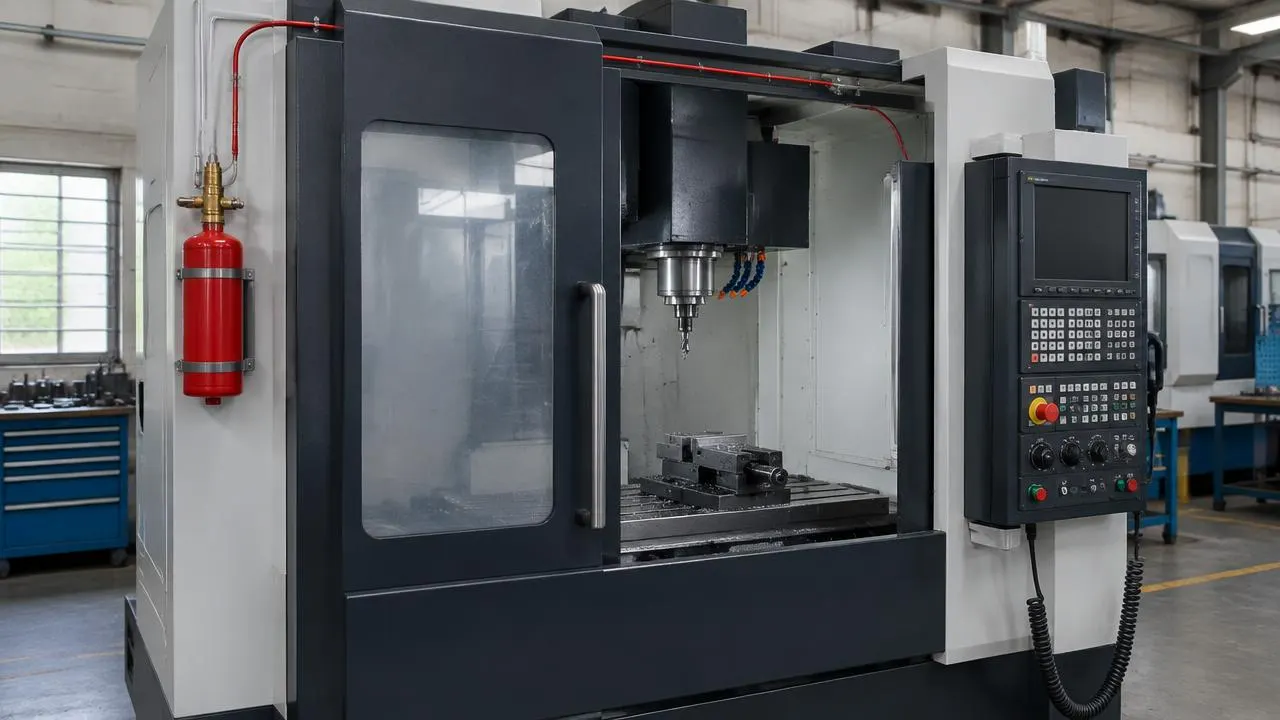
We start with the protected hazard and your operating conditions. Send current drawings and the relevant equipment details so we can agree the survey and work scope. Existing protection and site access are reviewed before any installation or test is planned.
Protect the machine hazard rather than the whole workshop
Cutting fluids, electrical faults and hot workpieces can create different fire risks inside machining equipment. The agent must suit the actual fuel and enclosure conditions. Water-miscible coolant and combustible oil are not the same hazard, so the coolant data sheet matters.
CNC fire suppression in Hyderabad sits within our India suppression scope. For cabinet-only protection read electrical panel suppression. A machine installation may need separate protection for its working enclosure and electrical cabinet.
Direct and indirect tube arrangements
A heat-sensitive detection tube can trigger release when a fire ruptures it. In a direct system, agent exits through the tube opening. In an indirect system, the pressure change operates the valve and agent discharges through dedicated pipes and nozzles.
Only use the arrangement within the selected manufacturer limits. Tube routing, enclosure openings and airflow can affect response or retention. Our tube-based suppression page explains the distinction. A cylinder placed beside the machine without matched detection and discharge coverage is not a complete installation.
Machine shutdown and extraction interfaces
The design should identify what stops after detection: cutting, fluid flow, extraction or another process function. Each action needs approval from the machine supplier and site engineer. Abrupt shutdown can itself introduce hazards, so a generic stop command is not enough.
Extraction can remove agent from an enclosure if it continues running during discharge. Doors and access panels can also change the protected condition. For shared extraction ducts, spark detection addresses a different risk and may need separate process assessment.
Installation access and maintenance
Detection tubing must be protected from cutting, abrasion and routine machine movement. Nozzles should remain clear of swarf, spray and maintenance activity. Cylinder supports need to suit vibration and access rather than relying on an improvised bracket.
We record the equipment fitted and the expected machine condition. Operators should understand alarms, manual release where fitted and the reset procedure. The suppression AMC page covers scheduled checks, while the machine maintenance team must report altered guards, extraction or tooling arrangements.
CNC fire suppression in Hyderabad workshops
Engineering sites around Jeedimetla, Patancheru and Bachupally can have mixed machines with different coolant and enclosure layouts. We ask for machine-specific details rather than pricing every unit as identical. EDM tanks require their own hazard review and manufacturer guidance.
Send photographs of the enclosure, electrical cabinet and extraction connection with the machine model. Fitting may need a planned stop and safe isolation. We agree the work window with your production team before installation, rather than promising that every machine can be protected without downtime.
Site planning in Hyderabad
Work in Hyderabad is planned around safe access, isolation and your operating hours. Tell us who manages permits and any landlord interfaces before attendance. We agree the survey and fitting sequence with your team; no unconfirmed response time or installation deadline is promised.
Areas we serve. Not sure we cover your area? Call the office and ask.
- Gachibowli
- Madhapur
- Jeedimetla
Standards and approvals
The applicable standard, manufacturer manual and consultant requirements must match the selected hazard and equipment. We check model-specific approval evidence where required. In Hyderabad, the Telangana State Disaster Response & Fire Services Department issues the fire NOC. Essatech does not issue or guarantee government approval.
How the work runs
- Send the site detailsShare drawings, hazard information and existing equipment details. We identify missing information before setting a survey scope.
- Review and proposeWe review the layout, interfaces and safety requirements, then record equipment and work responsibilities in the proposal.
- Install or testThe agreed work follows a site access and isolation plan. Interfaces are checked with the responsible contractors.
- Hand over recordsWe explain the operating arrangement, report findings and agree the maintenance or remedial work required.
What affects the price
- Protected hazard and equipment selection
- Access, installation routes and control interfaces
- Survey, testing and agreed aftercare scope
What to send us
- Current drawings and the exact site location
- Hazard, fuel or agent information relevant to the work
- Existing equipment models and consultant requirements
- Access restrictions and your preferred work window