

We start with the protected hazard and your operating conditions. Send current drawings and the relevant equipment details so we can agree the survey and work scope. Existing protection and site access are reviewed before any installation or test is planned.
Engine bays need a vehicle-specific design
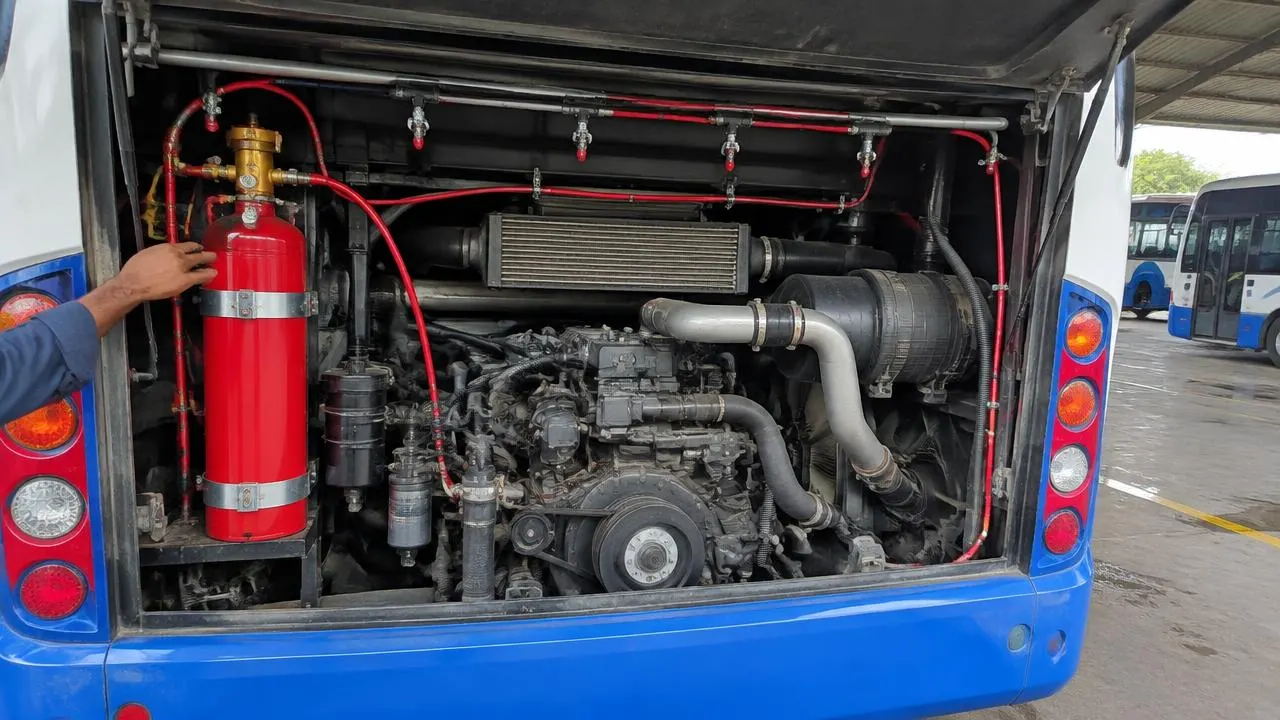
Hot surfaces, fuel lines, lubricating oil and electrical faults create different ignition risks in an engine bay. Ventilation, vibration and road contamination also affect protection. A stationary room system should not simply be transferred into a moving vehicle.
Vehicle fire suppression in India is part of our specialist suppression offer. Our tube-based systems page explains one detection approach. The complete vehicle arrangement must remain within the selected system limits and vehicle requirements.
Detection and discharge coverage
Heat detection may use tubing, linear sensing or another specified detector. Nozzle positions must reach the protected risk without being blocked by covers or maintenance changes. A small cylinder does not prove adequate protection for a large or open engine bay.
Water mist, wet chemical or other agents are chosen for tested applications, not by a blanket rule for every bus. We review the system manual, enclosure arrangement and intended fire hazards before proposing equipment. Driver indication and any manual release must be clearly identified.
Vibration and vehicle maintenance
Cylinder brackets, pipe supports and wiring need to suit vibration and the operating environment. Heat, oil and road debris can damage poorly routed tubing. Maintenance teams need access without removing protection every time a filter or belt is changed.
We record routing and mounting details at handover. Workshops must report changes to engine covers, fuel lines or equipment that can affect coverage. Scheduled suppression maintenance is agreed for the fleet location; it is not a promise of unrestricted roadside attendance across India.
Driver warnings and emergency response
A driver needs a clear warning and an agreed response procedure. Detection should not be presented as permission to keep driving through a fire. Stopping, evacuation and any shutdown sequence must follow the vehicle and operator safety requirements.
A suppression discharge does not prove that the engine is safe to restart. Residual heat, damaged fuel lines and electrical faults need assessment. For separate battery hazards see lithium battery protection; engine-bay suppression must not be claimed to stop every battery thermal runaway event.
Planning vehicle fire suppression in India fleets
Send the fleet depot location, vehicle models and engine-bay photographs before asking for a quotation. Bus, mining and construction applications differ in access, vibration and duty cycles. We agree survey, fitting windows and aftercare for the actual fleet rather than assuming one kit suits all vehicles.
Swastik and Rotarex publish vehicle-related suppression families, while Ansul also has mobile equipment systems. Their products serve different applications. We confirm the exact model, relevant evidence and current supply before proposing it. Essatech does not claim vehicle certification on behalf of the manufacturer.
Project attendance across India
Our Hyderabad team reviews the site location, access and operating constraints before agreeing attendance. For Gachibowli, Madhapur and Jeedimetla enquiries, send the exact address with your drawings. Sites elsewhere in India need an agreed travel and aftercare scope; no extra staffed office is implied.
Standards and approvals
The applicable standard, manufacturer manual and consultant requirements must match the selected hazard and equipment. We check model-specific approval evidence where required. In Hyderabad, the Telangana State Disaster Response & Fire Services Department issues the fire NOC. Essatech does not issue or guarantee government approval.
How the work runs
- Send the site detailsShare drawings, hazard information and existing equipment details. We identify missing information before setting a survey scope.
- Review and proposeWe review the layout, interfaces and safety requirements, then record equipment and work responsibilities in the proposal.
- Install or testThe agreed work follows a site access and isolation plan. Interfaces are checked with the responsible contractors.
- Hand over recordsWe explain the operating arrangement, report findings and agree the maintenance or remedial work required.
What affects the price
- Protected hazard and equipment selection
- Access, installation routes and control interfaces
- Survey, testing and agreed aftercare scope
What to send us
- Current drawings and the exact site location
- Hazard, fuel or agent information relevant to the work
- Existing equipment models and consultant requirements
- Access restrictions and your preferred work window