

We start with the protected hazard and your operating conditions. Send current drawings and the relevant equipment details so we can agree the survey and work scope. Existing protection and site access are reviewed before any installation or test is planned.
Choose the agent for the hazard
A server room and a fuel tank need different protection. Clean agents and inert gases serve enclosed rooms with sensitive equipment. Wet chemical systems protect cooking appliances, hoods and ducts. Foam is selected for compatible flammable liquids, while water mist depends on the tested application.
A fire suppression system in India is not a replacement for every sprinkler or hydrant. Building protection and specialist hazard protection often work together. Our Hyderabad suppression service explains local installation, while the suppression overview compares the main families.
Room protection and machine protection
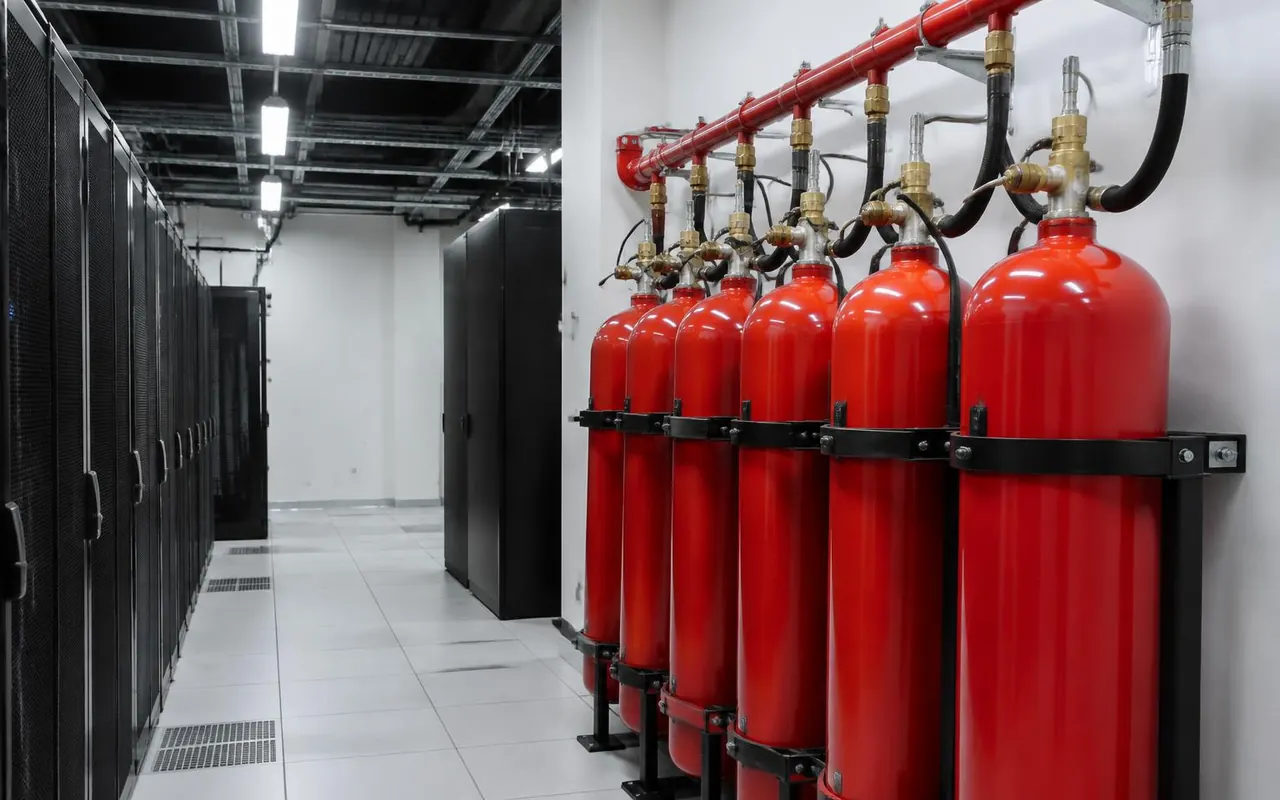
Gaseous total flooding fills a defined enclosure to its calculated concentration. Doors, ventilation dampers, cable openings and raised floors affect that design. A room integrity test checks leakage rather than discharging agent. Pressure relief and a controlled extract arrangement also need attention.
Local application protects the machine or cabinet instead of flooding a whole floor. Tube detection can trigger a separate nozzle network, or discharge through the tube in a listed direct system. Read our CNC machine protection and tube system page before sending equipment details.
Specialist services beyond the cylinders
The release panel, alarms and interlocks are part of the system. Shutdown signals might stop fuel, machinery or ventilation, but the sequence must match the hazard. Someone must own each interface between the suppression contractor, machine supplier and building controls team.
We cover room integrity testing, pressure relief vents and post-discharge extract. For process ducts see spark detection and extinguishing. For liquid hazards see foam suppression. These solve different problems and are not interchangeable.
Brands and current equipment availability
We supply and install Swastik, Ansul, Kidde and Rotarex. Each has different product families; a brand name alone does not prove suitability. We check the model, agent, design manual and relevant listing before proposing equipment. No written authorised-dealer status is claimed.
FM200 is the trade name associated with HFC-227ea. FK-5-1-12 is an agent designation; Novec 1230 is a branded fluid name, not every equivalent product. Current supply, refill arrangements and approvals must be confirmed for the selected system before ordering.
Planning a fire suppression system in India
For a site outside Hyderabad, send its exact location with drawings and the hazard description. We agree survey travel, installation responsibilities, local attendance and aftercare in the proposal. We do not describe every city as a staffed Essatech office or promise a nationwide response time.
Indian projects can involve consultant specifications, insurer conditions and local fire department requirements. Cylinder and filling arrangements also need checking under applicable Indian rules. The chosen standard and equipment listing should be documented alongside drawings, rather than used as a general claim about the whole building.
Project attendance across India
Our Hyderabad team reviews the site location, access and operating constraints before agreeing attendance. For Gachibowli, Madhapur and Jeedimetla enquiries, send the exact address with your drawings. Sites elsewhere in India need an agreed travel and aftercare scope; no extra staffed office is implied.
Standards and approvals
The applicable standard, manufacturer manual and consultant requirements must match the selected hazard and equipment. We check model-specific approval evidence where required. In Hyderabad, the Telangana State Disaster Response & Fire Services Department issues the fire NOC. Essatech does not issue or guarantee government approval.
How the work runs
- Send the site detailsShare drawings, hazard information and existing equipment details. We identify missing information before setting a survey scope.
- Review and proposeWe review the layout, interfaces and safety requirements, then record equipment and work responsibilities in the proposal.
- Install or testThe agreed work follows a site access and isolation plan. Interfaces are checked with the responsible contractors.
- Hand over recordsWe explain the operating arrangement, report findings and agree the maintenance or remedial work required.
What affects the price
- Protected hazard and equipment selection
- Access, installation routes and control interfaces
- Survey, testing and agreed aftercare scope
What to send us
- Current drawings and the exact site location
- Hazard, fuel or agent information relevant to the work
- Existing equipment models and consultant requirements
- Access restrictions and your preferred work window