

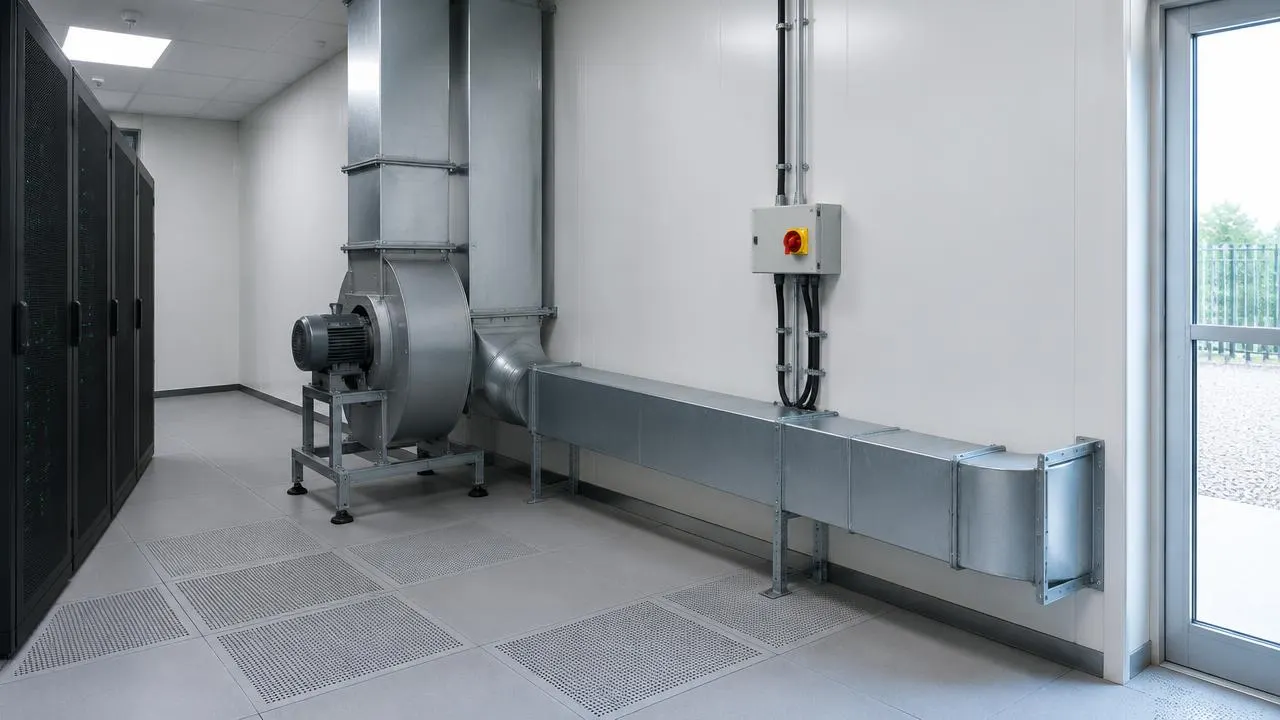
We start with the protected hazard and your operating conditions. Send current drawings and the relevant equipment details so we can agree the survey and work scope. Existing protection and site access are reviewed before any installation or test is planned.
Clearing a room is a separate recovery step
After discharge, a room can contain extinguishing agent, combustion products and an unsafe atmosphere. Opening the door does not prove that it is safe. The response plan must cover isolation, ventilation and atmospheric checks before anyone re-enters.
Post-discharge extract in Hyderabad is part of our specialist suppression service. It works with the CO2 system safety arrangements or the selected clean agent design. CO2 is especially hazardous at extinguishing concentrations and can collect in lower spaces.
Do not extract during the retention period
Gas suppression needs the agent to remain at the required concentration for the design period. Starting an extract fan at the wrong stage can remove that protection and allow a fire to continue or reignite. The cause-and-effect sequence must separate suppression from recovery.
We agree which controls are manual, who can operate them and what conditions permit extraction. Automatic restart of normal ventilation is not assumed safe. The release and alarm arrangement must be coordinated with the building controls contractor and site emergency procedure.
Choose pickup positions and the outlet route
Extract pickup positions depend on the agent and enclosure arrangement. Low points, raised floors and pits can hold an atmosphere that is not cleared by a high wall fan. Make-up air is also needed for the planned airflow to occur.
The discharge outlet must not create a hazard for people outside the room. Nearby doors, windows, fresh-air intakes and escape routes need assessment. Our pressure relief vent page covers a different duty: limiting pressure during release rather than ventilating afterwards.
Safe re-entry requires a site procedure
The recovery procedure identifies competent personnel, measurements and entry authorisation. It also covers residual fire hazards and damaged equipment. A fan running for a guessed number of minutes is not proof that oxygen or agent levels are acceptable.
Check the enclosure and suppression equipment before returning the room to normal service. Our room integrity testing checks retention after relevant alterations. The suppression AMC service provides the agreed inspection and restoration scope, not an unrestricted emergency-entry service.
Post-discharge extract in Hyderabad buildings
Server rooms in Madhapur, Gachibowli and Hitech City may share ventilation routes with other occupied spaces. A common duct cannot be assumed suitable for extracting discharged agent. Drawings and site checks should identify the actual route and any shared dampers.
Industrial control rooms need a recovery plan that accounts for process shutdown and electrical damage. We review access with the facilities team before fitting fans or controls. The agreed handover should explain operation plainly so security staff do not confuse extraction with a signal to enter.
Site planning in Hyderabad
Work in Hyderabad is planned around safe access, isolation and your operating hours. Tell us who manages permits and any landlord interfaces before attendance. We agree the survey and fitting sequence with your team; no unconfirmed response time or installation deadline is promised.
Areas we serve. Not sure we cover your area? Call the office and ask.
- Gachibowli
- Madhapur
- Jeedimetla
Standards and approvals
The applicable standard, manufacturer manual and consultant requirements must match the selected hazard and equipment. We check model-specific approval evidence where required. In Hyderabad, the Telangana State Disaster Response & Fire Services Department issues the fire NOC. Essatech does not issue or guarantee government approval.
How the work runs
- Send the site detailsShare drawings, hazard information and existing equipment details. We identify missing information before setting a survey scope.
- Review and proposeWe review the layout, interfaces and safety requirements, then record equipment and work responsibilities in the proposal.
- Install or testThe agreed work follows a site access and isolation plan. Interfaces are checked with the responsible contractors.
- Hand over recordsWe explain the operating arrangement, report findings and agree the maintenance or remedial work required.
What affects the price
- Protected hazard and equipment selection
- Access, installation routes and control interfaces
- Survey, testing and agreed aftercare scope
What to send us
- Current drawings and the exact site location
- Hazard, fuel or agent information relevant to the work
- Existing equipment models and consultant requirements
- Access restrictions and your preferred work window