

Owners sometimes ask which one they can skip. The sprinkler vs hydrant system question has a clear answer once you see how each works. This guide explains what each does, where each fits and how they work together.
How a sprinkler system works
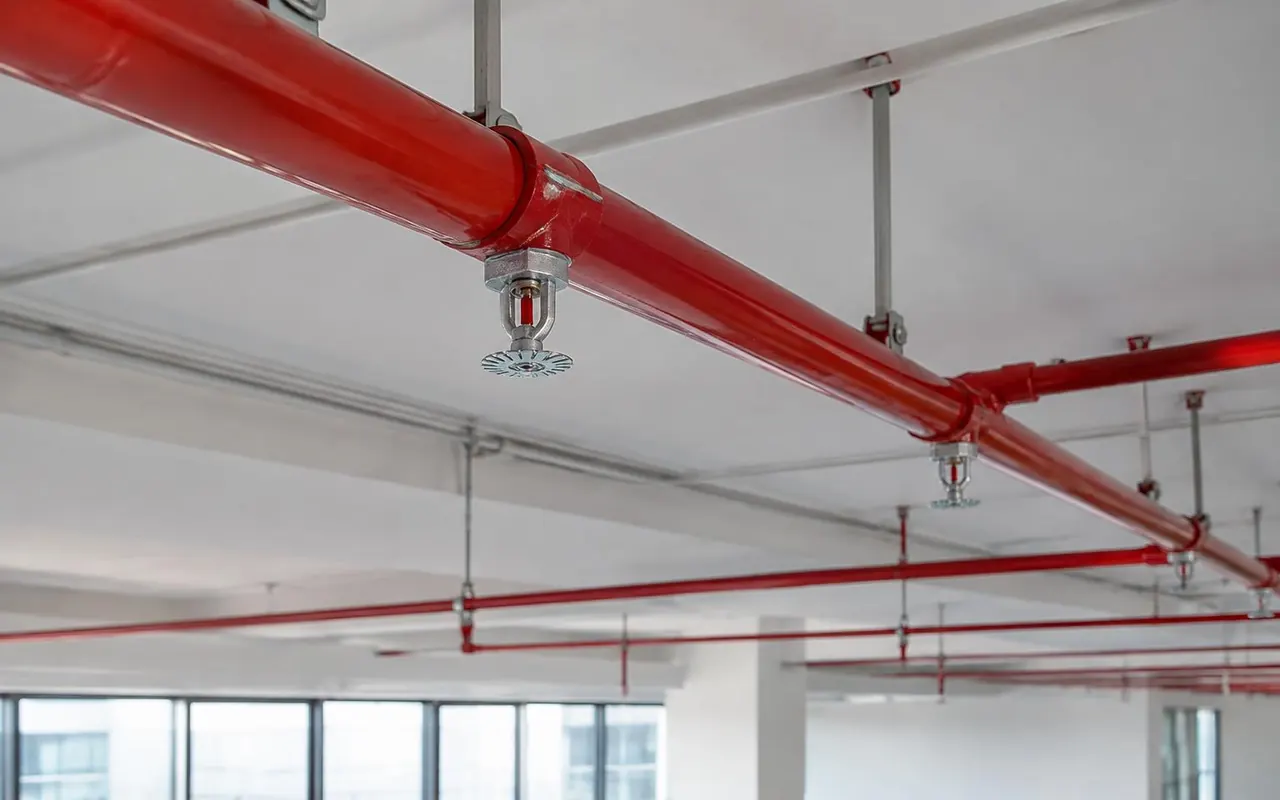
Sprinkler heads sit on pipes under the ceiling. Each head has a sealed part that opens when the air around it becomes hot enough. Only the heads near the fire open, and they spray water on the fire area.
This works day and night with nobody present. It controls a fire early and gives people time to leave. Read our page on the fire sprinkler system.
How a hydrant system works
A hydrant system is a network of pipes and valves that carries water to landing valves, hose reels and outdoor hydrants. Someone has to open the valve, unroll the hose and direct the water. Fire brigades also connect to it.
It suits larger fires and gives reach to areas that sprinklers do not cover. Our fire hydrant system page gives detail.
Where each one fits
Sprinklers protect sleeping areas, offices, malls, warehouses and parking. Hydrants and hose reels cover staircases, corridors and the outside of a building. Special hazards such as a server room or a flammable store may need another system, such as gas or foam.
The authority's rules for your building decide what is mandatory, and we follow them.
What they share
Both draw water from tanks through pumps, so the pump room is the heart of the system. A fire pump that does not start makes both useless. We test pumps under flow, check tank levels and make sure the supply lasts for the time the rules require.
Read our guide to fire pump installation.
Cost and upkeep
Sprinklers need more pipe and heads, so the first cost is usually higher. Hydrants need less pipe but need trained people. Both need testing: valves, pumps, hoses and heads. A yearly plan keeps them ready, and our turnkey fire fighting team can quote the full set.
Mistakes to avoid
Owners weighing a sprinkler vs hydrant system often make one of these mistakes.
- Treating sprinklers as a replacement for hydrants, or the other way round, when the rules ask for both
- Leaving valves closed after maintenance, so that the system cannot flow
- Never running the pumps, so that a fault stays hidden until a fire
- Storing goods too close to sprinkler heads, which blocks the spray
- Letting hose reels rust or kink because no one checks them
Your next step
Share your plans and the use of each floor. We will tell you which systems the building needs, what each will cost and how we will test them. Essatech designs, supplies, installs and services these systems in Hyderabad and Visakhapatnam. Send us your drawings or photos for a priced plan.
What affects the price
- Building size and use
- Number of floors
- Sprinkler heads and pipe length
- Hydrant points and hose reels
- Pump set and tanks
- Testing and documents
What to send us
- Building drawings
- Use and height of the building
- Water supply details
- Existing equipment