

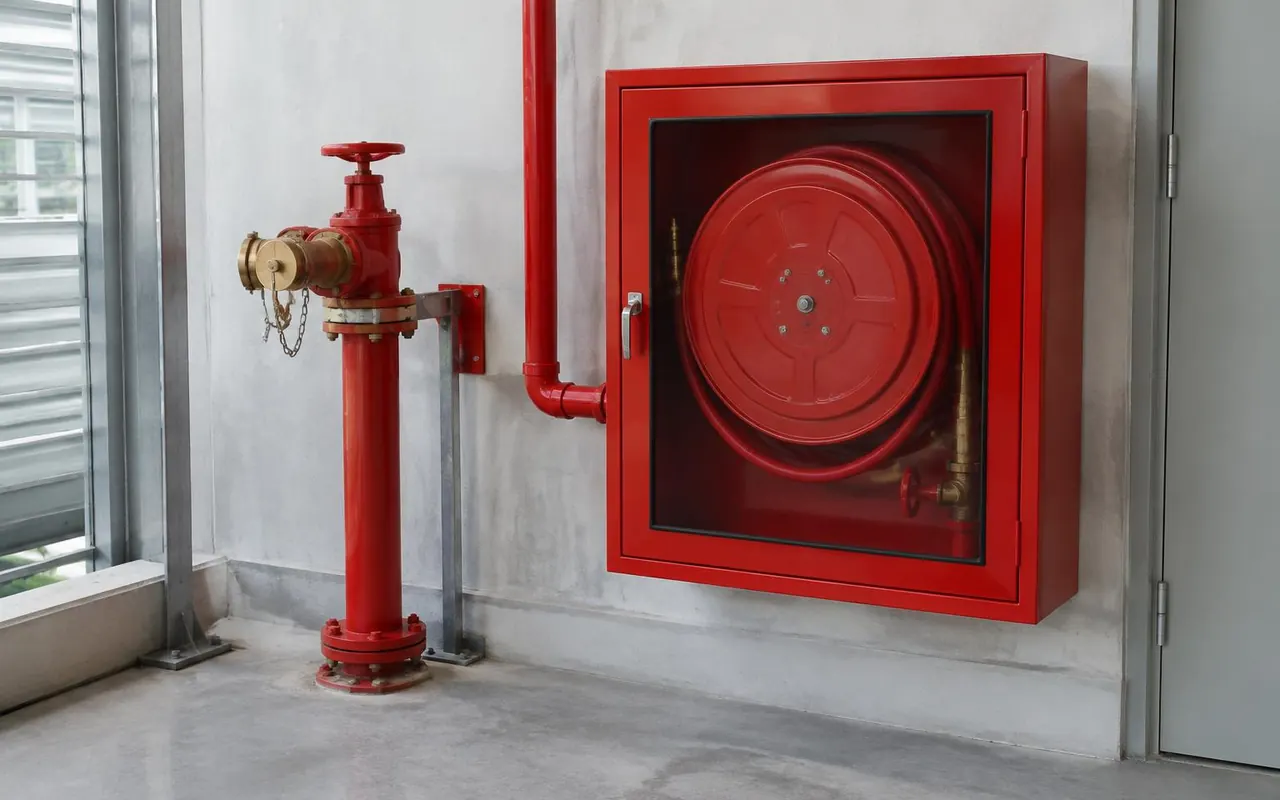
This page is part of our turnkey fire fighting projects range. On many Hyderabad sites we inspect, the hydrant pipes look fine from the corridor, but the pump room tells a different story. A valve is shut, the jockey pump runs every few minutes, or the diesel engine has not started in months. A fire hydrant system in Hyderabad is only useful if water reaches the far landing valve at full pressure on the day it is needed. We build and look after these systems as part of our fire protection work, from design through to the fire department inspection.
Wet riser, down-comer and yard hydrant
These three names describe where the water comes from and where it goes. A wet riser is a vertical pipe kept full of water under pressure from the fire pumps, with a landing valve on each floor. A down-comer is fed from a tank on the terrace and relies on gravity, so it suits only shorter buildings or the upper floors of a tower.
Yard hydrants sit outside, on a ring main around the building or plant. Fire engines and trained staff connect hoses to them to fight a fire from outside or to cool nearby structures.
- Type
- Wet riser
- Where it runs
- Vertical pipe inside the building, charged by pumps
- Typical use
- Residential towers, offices, hospitals
- Type
- Down-comer
- Where it runs
- Vertical pipe fed by a terrace tank
- Typical use
- Low and mid-rise buildings, upper zones of towers
- Type
- Yard hydrant
- Where it runs
- Ring main around the outside
- Typical use
- Factories, warehouses, campuses
The pump set and why there are three pumps
Most hydrant pump rooms hold three pumps, and each has its own job. The jockey pump is small. It keeps the pipes topped up and holds pressure against small leaks, so the big pumps do not start for no reason.
The main electric pump starts automatically when a hydrant is opened and the pressure drops. It supplies the full flow the design asks for. A diesel standby pump does the same job when mains power fails, which is common in a large fire.
Pressure switches decide the order in which the pumps start. If those settings drift, the main pump may never start, or the jockey pump may hunt on and off all day. Our fire pump house page covers pump rooms in more detail.
Sizing the water tank
There is no single tank size that fits every building. The storage needed is an output of the design, not a number to pick from a chart. The main inputs are building height, floor area, use and hazard level, and whether sprinklers share the same water.
We take these inputs from your drawings and the applicable rules, then size the tank, pumps and pipes together. Where the tank is shared with domestic water, the fire reserve must be protected so daily use can never drain it.
Pipes, valves, hose reels and hose boxes
Hydrant pipework is usually heavy-grade steel, painted red, with welded or grooved joints. Underground mains need wrapping or coating against corrosion. Every pipe is fixed with proper clamps and supports, because a charged main pushes hard at each bend.
Each landing valve sits at a height a firefighter can reach, inside or next to a hose box holding canvas hoses and a branch pipe. Hose reels give staff a smaller hose they can use without training in hydrant hoses. Isolation valves let one section be shut for repair while the rest stays live.
- Landing valves on each floor or at each yard point
- Hose boxes with hoses and branch pipes
- First-aid hose reels near exits and stairs
- Fire brigade inlet so engines can pump into the system
- Pressure gauges at the pump and at the top of the riser
- Air release valves at high points
Testing and what the fire officer checks
New pipework gets a hydraulic test, where it is held at a higher pressure for a set time to prove there are no leaks. Then we run a flow test at the most remote landing valve, checking pressure and flow against the design.
Pump tests come next. We open a hydrant and confirm the jockey stops, the main electric pump starts, and the diesel pump starts if power is cut. During inspection, the fire officer usually opens a valve on the top floor, watches the pressure and checks that every pump starts by itself.
Common hydrant mistakes we fix
Closed isolation valves are the most dangerous mistake, because the system looks complete but no water flows. Rusted pipework in basements and shafts comes next, often from leaks nobody reported. Flat jockey pump settings follow close behind, with the small pump running constantly and wearing itself out.
Missing hoses, broken hose box glass and blocked access to landing valves also appear on many sites. A fire safety AMC finds these problems on a planned visit rather than during an inspection.
Hydrant systems across Hyderabad
Residential towers and IT campuses in Gachibowli, Kokapet and Madhapur make up a large share of our hydrant work. These buildings run tall, so they need wet risers, pressure zoning and pump rooms in the basement.
Pharma units and factories at Jeedimetla, Patancheru and Bachupally usually need yard hydrant ring mains around production blocks and stores. Many also link hydrants with a fire sprinkler system fed from the same tank and pump room.
Inspection is done by the Telangana State Disaster Response & Fire Services Department, and our fire NOC consultant page explains how we prepare buildings for it. Our team designs and installs each fire hydrant system in Hyderabad from the Gachibowli office, and the Hyderabad office page lists our other local services. For coastal sites, see our fire hydrant system in Visakhapatnam page.
Areas we serve. Not sure we cover your area? Call the office and ask.
- Gachibowli
- Kokapet
- Madhapur
- Jeedimetla
- Patancheru
- Bachupally
Standards and approvals
We design to NBC 2016 Part 4, IS 3844 for internal hydrants and IS 13039 for external hydrants, with NFPA 14 and NFPA 20 as references. The fire department decides what each building needs, and Essatech does not issue or promise any approval.
How the work runs
- Send drawingsShare floor plans, building height and use, and water storage details.
- DesignWe size the tank, pumps and pipes and mark every landing valve and hose reel.
- QuoteYou get an itemised quote covering pumps, pipework, valves, civil work and testing.
- InstallationPump room, risers and yard mains go in, with supports and coating.
- Testing and handoverWe run hydraulic, flow and pump tests and hand over records for your fire hydrant system in Hyderabad.
What affects the price
- Building height and area
- Hazard class
- Water source and tank size
- Pump duty, flow and head
- Pipe size and material
- Number of landing valves
- Civil work
- Approvals and testing
What to send us
- Floor plans
- Building height and use
- Water storage and supply details
- Existing fire system details
- Fire department letters, if any
- Your deadline