

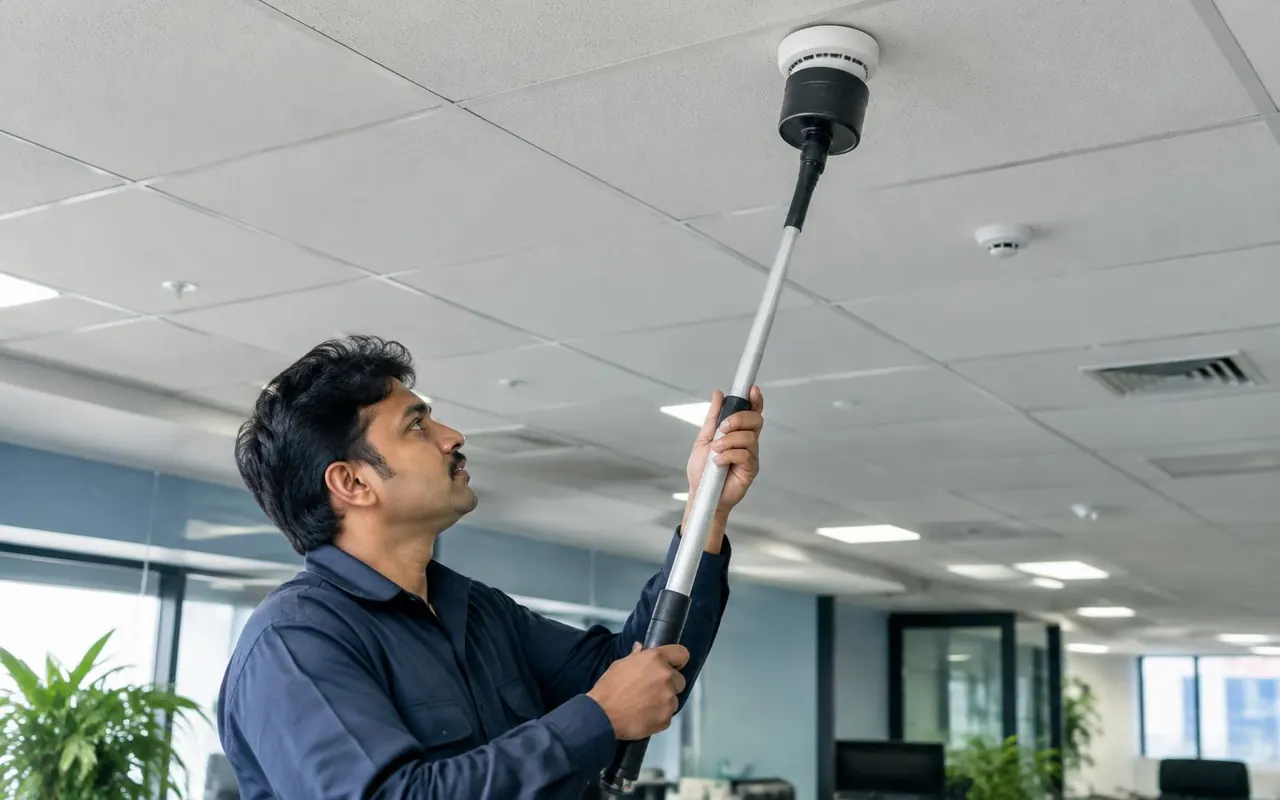
A fire alarm that is never tested may fail when it is needed. A fire alarm maintenance schedule turns good intentions into a routine, with dates and names. The schedule below is typical practice. Check the maker's manual and the standard that applies to your building.
Weekly checks
Test one call point each week, a different one each time, and note the result. Check that the panel shows normal status and that no fault lights are on. Tell residents or staff before the test so that no one panics. A short notice on the lift lobby board is enough, and it saves unnecessary calls to the fire brigade.
Keep a logbook next to the panel and sign every entry. Ask the person who tests to write the time, the device and the result, so that the next person can follow.
Monthly checks
Check the panel for faults, silenced zones and disabled devices. Test the batteries and the mains supply. Inspect sounders and strobes. Look at detectors in dusty areas for dirt.
Our fire alarm panel page shows what a healthy panel displays.
Quarterly checks
Test a sample of detectors each quarter so that every detector is tested across the year. Use the right test method for each type: smoke, heat or flame. Clean detectors that show dust.
Replace any detector that fails, and record the replacement. Keep a few spare detectors of the right type in stock, so that a failed unit is replaced the same day and the zone is not left unprotected.
Annual full test
Once a year, an engineer tests every detector, call point and sounder. They check the panel's cause and effect, such as lift recall or door release. They test batteries under load and give a written report.
Our fire safety AMC plan includes this visit and the report.
Records and faults
Keep every test record for inspection. Fix faults at once, and note the date of repair. If a zone must be disabled, log the reason and the date, and tell everyone. For more on testing smoke detectors, read our smoke alarm testing guide.
Mistakes to avoid
A fire alarm maintenance schedule fails when sites make these errors.
- Testing the same call point every week
- Leaving zones disabled after a false alarm and forgetting them
- Ignoring battery age until the panel shows a fault
- Never testing the links to lifts and doors
- Skipping written records
Your next step
Send us your panel model and the last report. We will set up a schedule, run the tests and give you a written record for each visit. Essatech designs, supplies, installs and services these systems in Hyderabad and Visakhapatnam. Send us your drawings or photos for a priced plan.
What affects the price
- Number of devices
- Visit frequency
- Detector replacement
- Battery replacement
- Reports for the authority
- Emergency call-out
What to send us
- Panel make and model
- Number of detectors and call points
- Last service report
- Any known faults