

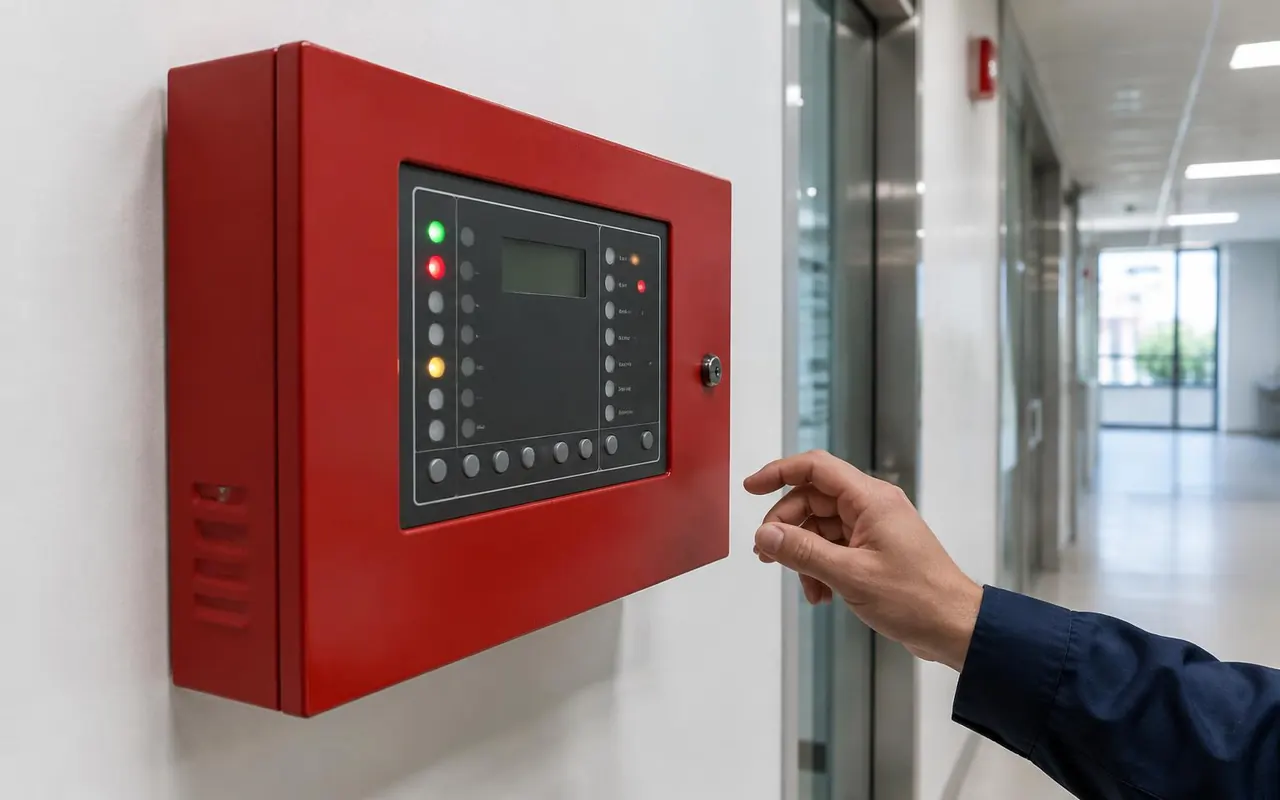
Owners often ask which type to buy and hear different answers from each seller. The choice between conventional vs addressable fire alarm depends on building size, layout and who will use the panel. This guide gives the short answer first, then the reasons.
How a conventional system works
A conventional panel divides the building into zones, such as a floor or a wing. Detectors in a zone share one pair of wires. When one detector senses smoke, the panel lights that zone, and staff must search the zone to find the cause.
The parts are simple and easy to replace. Small shops, schools, godowns and low-rise offices use it widely. Our page on the conventional fire alarm panel lists the parts.
How an addressable system works
An addressable panel talks to every device on a loop of cable. Each detector, call point and module has its own address, so the panel names the exact device and its location. A security guard can walk straight to the right room.
Loops can be cut and still work from both ends. Large buildings, hospitals, hotels and data rooms prefer it. Read more on addressable fire detection.
Which one suits your building
Use this as a guide:
- Up to a few thousand square feet, one or two floors: conventional is often enough
- Several floors, many rooms or mixed use: addressable saves search time
- Hospitals, hotels and data rooms: addressable, with clear device names
- Phased construction: addressable, because loops extend easily
- Tight budget, simple layout: conventional with enough zones
Cost and long-term running
Conventional equipment costs less at the start, and it needs more cable on large sites because every zone needs its own run. Addressable equipment costs more per device, but it saves cable and time on large buildings, and it speeds up testing.
Spare parts and service also matter. We keep to makers whose parts are available in India and give you a written list of what is installed.
What neither type changes
Both types need correct detector spacing, working sounders and regular testing. A badly designed addressable system can be worse than a well-designed conventional one. Design comes first, and our fire alarm systems hub shows how we approach it.
Mistakes to avoid
These are the errors we see most often when owners compare conventional vs addressable fire alarm.
- Buying addressable for a tiny shop, where a simple panel with enough zones would do
- Buying conventional for a large site with a few zones, so that a search takes minutes
- Choosing by brand name alone, without checking detector spacing and loop design
- Forgetting to plan for later extensions, which makes loops or zones hard to add
- Ignoring service, so that no engineer in the city can repair the panel
Your next step
Send us your plans and tell us how the building is used. We will recommend one type, explain why and quote both so you can see the difference. Essatech designs, supplies, installs and services these systems in Hyderabad and Visakhapatnam. Send us your drawings or photos for a priced plan.
What affects the price
- Building size and number of floors
- Number of detectors and call points
- Cable length and fire-rated cable
- Panel size and brand
- Integration with lifts, doors and PA
- Testing and handover documents
What to send us
- Floor plans or drawings
- Building use and number of floors
- Any existing panel or detectors
- Local authority requirements