

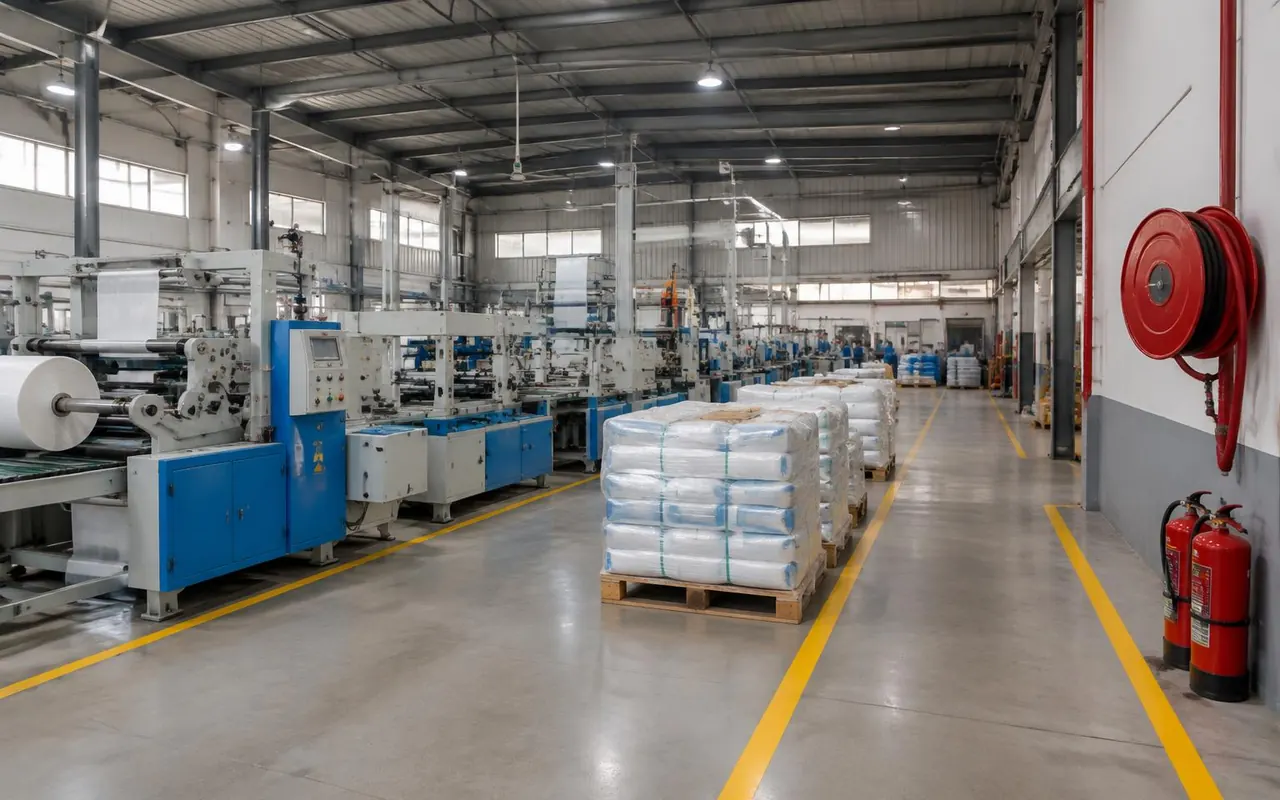
A standard 6 kg unit is built for a desk or a corridor. A plant with solvents, reactors, drums and conveyors needs more agent, more reach and sometimes a different agent altogether. Industrial fire extinguishers in Hyderabad cover that gap, from a wheeled 25 kg powder unit to a 135 kg trolley for tank farms.
This page covers the main industrial formats. Smaller formats are compared in our guide to fire extinguisher types.
Wheeled units and what they hold
Trolley mounted extinguishers sit on two or four wheels so one person can pull them to the fire. Industrial fire extinguishers in Hyderabad range from about 25 kg up to 135 kg or litres, depending on the agent.
- Unit
- Trolley DCP
- Agent
- ABC or BC dry powder
- Typical plant use
- Boiler houses, loading bays, gas risks
- Unit
- Trolley foam
- Agent
- Mechanical foam or AFFF
- Typical plant use
- Solvent yards, diesel tanks, drum stores
- Unit
- Trolley CO2
- Agent
- Carbon dioxide
- Typical plant use
- Control rooms, large panels, switchgear
- Unit
- Class D unit
- Agent
- Special metal powder
- Typical plant use
- Metal powder and magnesium areas
BC powder for fuel and gas risks
BC powder is based on sodium bicarbonate and is fast on flammable liquids and gas jets. It suits fuel tanks, burners and pump houses. It leaves a fine residue, so keep it away from sensitive electronics.
For fire in foam compatible fuel yards, our foam fire extinguisher in Hyderabad page explains the portable and 50 litre formats that sit below the largest trolleys.
Class D powder for burning metals
Some metals burn on their own, including magnesium, aluminium powder and sodium. Water, foam and ordinary powder react badly with them and can make the fire worse.
Class D units hold a special powder that smothers the metal and forms a crust. IS 11833 covers this powder. Check the current revision, and confirm the powder matches your metal before ordering.
Automatic modular units
A modular unit is fixed to the ceiling of a closed space such as a panel room, a store or a small DG enclosure. A heat bulb bursts at a set temperature and the unit discharges without anyone present.
Industrial fire extinguishers in Hyderabad of this type help in unmanned rooms and over equipment that runs at night. They are a supplement to manual units and to the plant's fire safety audit in Hyderabad, not a replacement for either.
Plants in the Hyderabad industrial belt
Pharma and bulk drug units in Patancheru, Jeedimetla and the Genome Valley area handle solvents, powders and process heat. They usually need trolley foam at solvent yards and trolley CO2 near control panels. Some also hold metal catalysts that call for Class D powder.
Warehouses and assembly units near Shamshabad and Uppal hold stacked goods and forklift batteries, and trolley DCP at the dock suits them.
Telangana State Disaster Response & Fire Services reviews sites for suitable extinguishers, along with hydrants. Our team plans both under one scope, as a turnkey fire fighting contractor in Hyderabad. Plants on the coast can look at industrial fire extinguishers in Visakhapatnam.
Areas we serve. Not sure we cover your area? Call the office and ask.
- Patancheru
- Jeedimetla
- Shamshabad
- Uppal
Standards and approvals
Portable units are built to IS 15683, and wheeled units follow IS 16018. Class D powder is covered by IS 11833. Selection and placement follow IS 2190. Check the current revision of each standard and the maker's test marks.
How the work runs
- Hazard reviewWe list the fuels, metals, gases and electrical loads in each area.
- Agent selectionWe pair each hazard with powder, foam, CO2, Class D powder or a modular unit.
- Layout and quoteYou receive positions on your plan and an itemised quote.
- Supply and mountingWe deliver trolleys, fix ceiling modules and tag every unit.
- ServicingWe inspect, test and refill on a written calendar.
What affects the price
- Agent and unit size
- Number of trolley positions
- Class D powder for specific metals
- Modular ceiling unit count
- Access for heavy units
- Servicing interval
What to send us
- Plant layout or floor plan
- List of fuels, gases and metals
- Existing extinguisher count
- Photos of key process areas
- Last inspection notes