

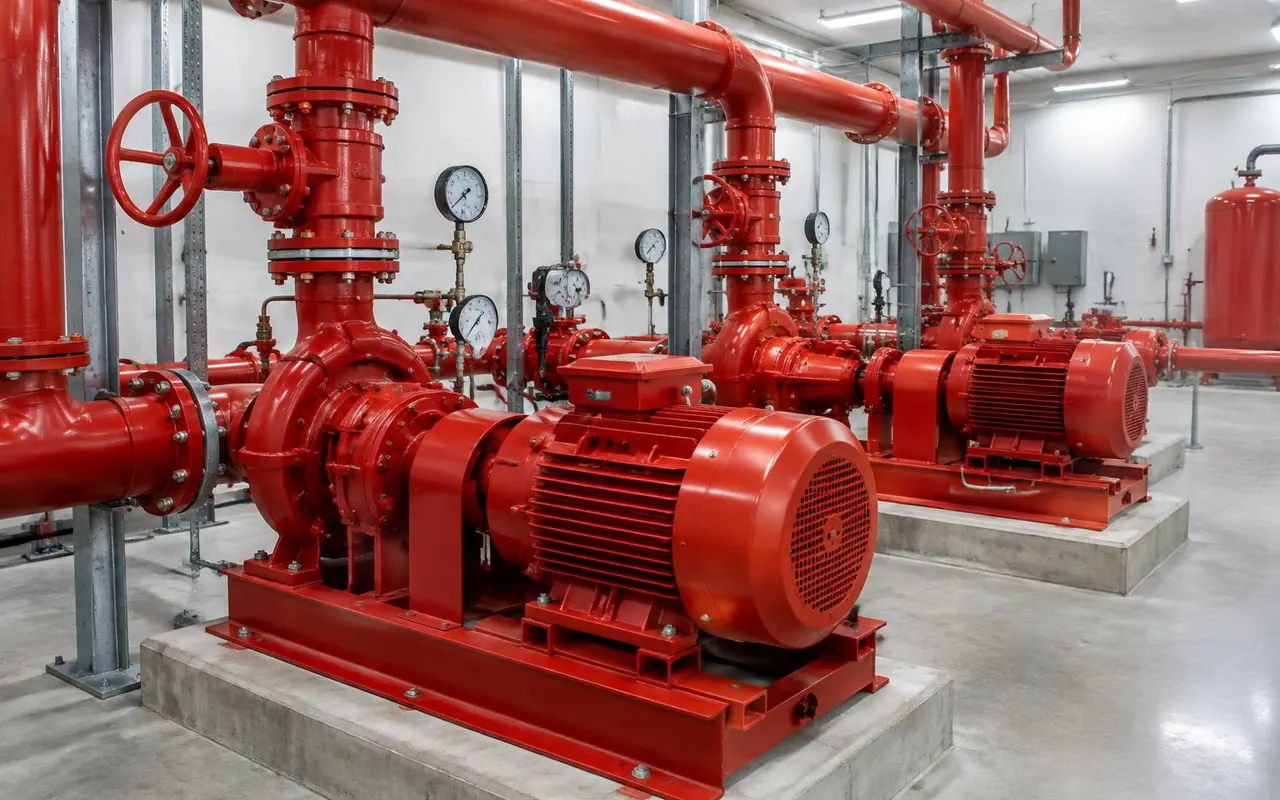
Foam is the standard answer to fuel fires, because water alone sinks through burning liquid. Understanding how a bladder tank foam system works helps you check a design and spot a poor one. This guide explains each part and how it behaves in a real fire.
Why foam is needed
Burning fuel floats on water, so water can spread the fire. Foam forms a blanket on top of the fuel, cuts off the air and cools the surface. It also stops vapour from rising and catching fire again.
Fuel depots, generator sets, workshops and process plants use foam for this reason.
The parts of the system
A bladder tank has a steel shell and a flexible bag inside, filled with foam concentrate. Water enters the shell around the bag. A proportioner in the line sets the mix. Pipes carry the foam solution to nozzles or foam makers.
A fire pump supplies the water flow and pressure.
How the mix happens
When water flows through the proportioner, a small part of it enters the shell and squeezes the bag. The squeezed concentrate flows out to the proportioner, where it mixes with the main water stream. The mix is set at a ratio such as three or six parts in a hundred, depending on the concentrate.
Because water pressure does the work, the system needs no separate power for mixing.
Where it is used
Common sites include fuel storage, loading bays, boiler houses and plant rooms. Hangars and large workshops also use it. The foam type must suit the fuel, so a design starts with a hazard study.
Read more on our bladder tank foam system page.
Testing and upkeep
Foam concentrate ages, so samples are tested at set intervals and replaced when they fail. Bladders can leak, valves can stick and nozzles can clog. Flow tests prove that the proportioner delivers the right ratio. A service plan keeps records for the authority, and our fire safety AMC covers this.
Mistakes to avoid
When owners ask how a bladder tank foam system works, these faults come up in practice.
- Choosing a foam type that does not suit the fuel on site
- Leaving old concentrate in the tank beyond its tested life
- Not flow-testing the proportioner, so the ratio is never proved
- Letting valves stay closed after maintenance
- Having a pump that cannot give the pressure the proportioner needs
Your next step
Send us the fuel types and a site plan. We will study the hazard, size the tank and pump and test the foam ratio at handover. Essatech designs, supplies, installs and services these systems in Hyderabad and Visakhapatnam. Send us your drawings or photos for a priced plan.
What affects the price
- Tank size and foam volume
- Foam type and ratio
- Proportioner and pipework
- Pump flow and pressure
- Nozzles or foam makers
- Testing and concentrate refills
What to send us
- Fuel types and quantities
- Area to protect
- Water supply and pump details
- Drawings of the site