

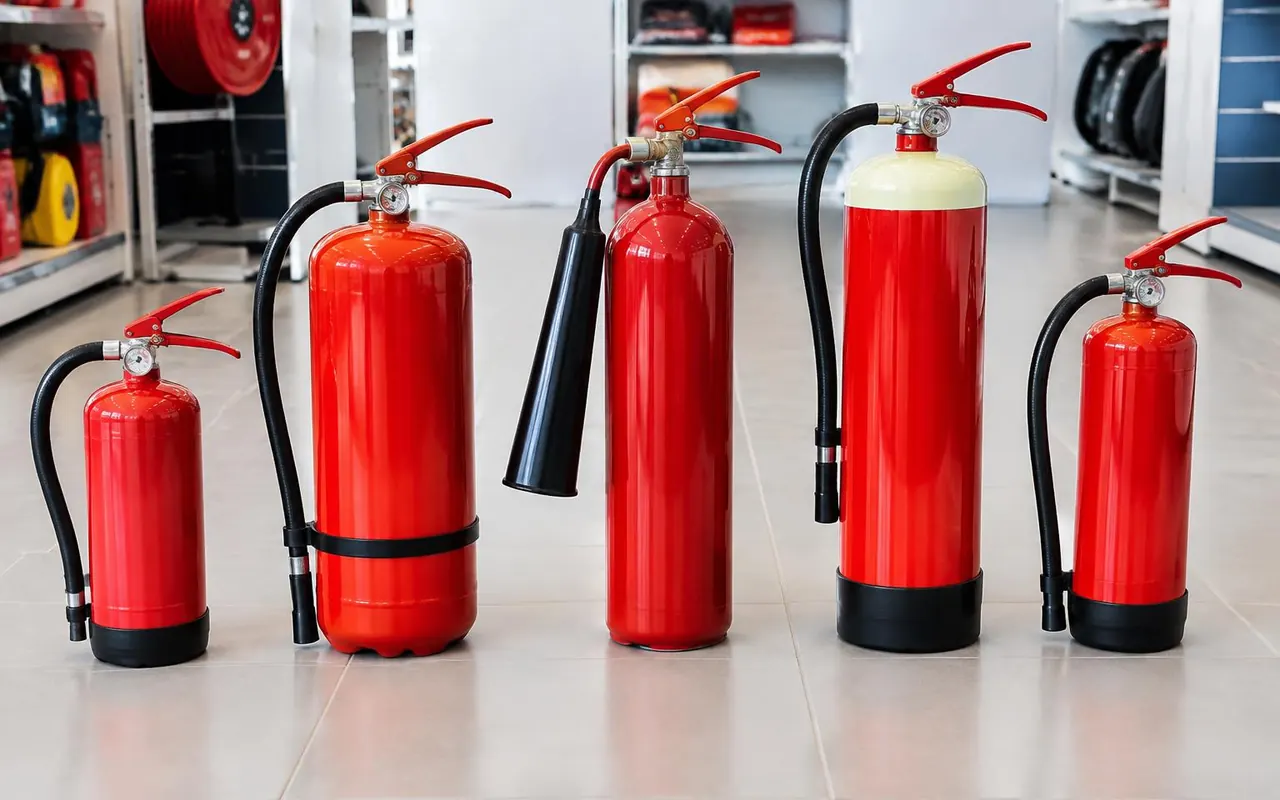
A harbour city has plenty of electrical rooms, instrument cabins and offices full of paper and screens. A CO2 fire extinguisher in Visakhapatnam suits the electrical ones. It does not suit every fire, and our guide to types of fire extinguishers shows where it sits among the other types.
Below we explain how CO2 works, why the sea air matters for the valve and horn, and how we check each cylinder.
What the gas can and cannot do
Carbon dioxide displaces the air around a flame and chills the burning surface slightly. It does not conduct current, so a person can use it on energised equipment. Nothing needs cleaning up after the fire, which spares delicate instruments.
The throw is short, so the user must stand close. Wind from an open door or a fan can blow the gas away. On Class A fuels it only knocks the flame down for a moment, so keep a powder unit beside it.
Salt air, valves and horns
Salt in the air settles on brass fittings and the discharge horn. Over a monsoon or two, it can seize the valve, crack a rubber hose or pit the cylinder base. A unit that cannot open in a fire is worse than no unit.
We wipe each fitting at every visit, check the valve moves freely and replace worn hoses. Units near doors that face the sea may be wrapped or placed in a cabinet.
- Wipe salt off the valve, horn and base
- Check the pin moves and the seal is intact
- Replace cracked or hardened hoses
- Weigh the cylinder and record the figure
Matching the size to the site
The table lists sites we see around the port and industrial belt, with the cylinder sizes that usually fit.
- Site
- Port office server cabinet
- Usual size
- 2 or 3 kg
- Why
- Small enclosed space
- Site
- Control room or MCC room
- Usual size
- 4.5 kg
- Why
- Panels and cable trays
- Site
- Ship chandler store with electrics
- Usual size
- 4.5 kg
- Why
- Mixed stock and wiring
- Site
- Workshop or generator room
- Usual size
- 6.5 or 9 kg
- Why
- Fuel and live motors
Cold horn and closed rooms
The horn freezes during discharge, so never grip it. In a tiny closed cabin, the gas can displace breathable air. Use it from outside the door when possible. Read our ABC fire extinguisher in Visakhapatnam page for the unit that suits offices with people inside.
CO2 extinguishers around Vizag port and industry
Port offices and agents near the harbour keep servers, billing systems and cargo records in small rooms close to the water. Ship chandlers in the Autonagar and Gajuwaka belt store cable, batteries and stock in the same sheds. A CO2 unit at the panel door covers the electrical part of that risk.
Control rooms at industrial sites near Duvvada and Parawada need larger cylinders, and they depend on weighing visits to find slow gas loss. We schedule those with the site team.
Visits by the Andhra Pradesh Fire Services check the label and date on each cylinder. We supply the CO2 fire extinguisher in Visakhapatnam and keep the records. For a whole room, see CO2 flooding system in Visakhapatnam. Hyderabad customers can read CO2 fire extinguisher in Hyderabad.
Areas we serve. Not sure we cover your area? Call the office and ask.
- Autonagar
- Gajuwaka
- Duvvada
- Parawada
- Maharanipeta
- Seethammadhara
Standards and approvals
Portable CO2 extinguishers follow IS 15683, with selection and upkeep guided by IS 2190. Check the current revision of each before ordering.
Weighing and recharging sit within our fire extinguisher refilling service.
How the work runs
- Site visitWe note the electrical rooms, fuels and door positions.
- SelectionWe pick sizes and mounting spots for each CO2 fire extinguisher in Visakhapatnam sites use.
- QuoteYou receive an itemised quote.
- Supply and fittingWe mount the units and record the stamped weight.
What affects the price
- Cylinder size
- Number of rooms covered
- Cabinets or corrosion protection
- Weighing visit frequency
- Refilling after use
- Distance from our office
What to send us
- Photos of the panel or control room
- Room size and door layout
- Existing units and their weights
- Site access rules for the port or plant
- Preferred visit date