

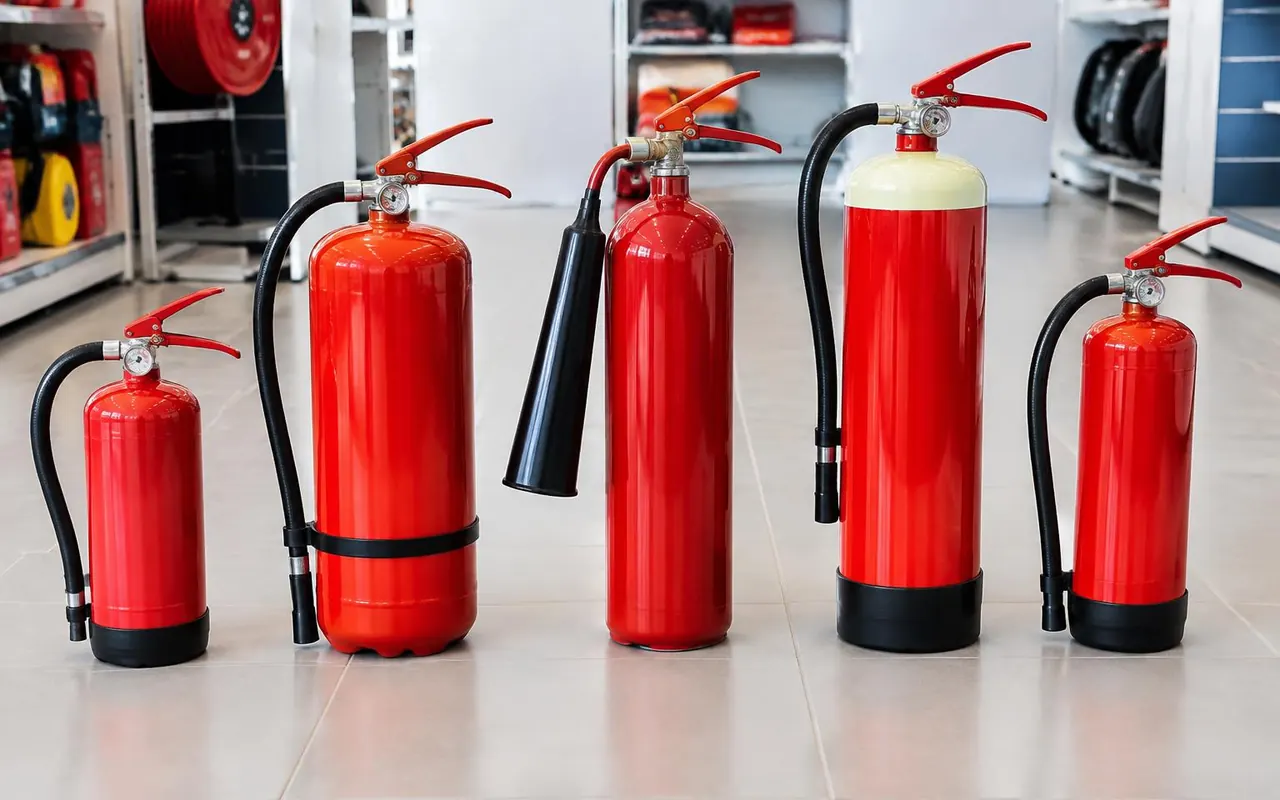
The ABC fire extinguisher in Visakhapatnam is the usual first purchase for a shop, clinic or guest house. Each one handles cloth stock, packing material, fuel spills and gas leaks that catch light. Our guide to types of fire extinguishers compares them with CO2, foam and wet chemical units.
This page explains the powder, the sea-air problems we see on the coast, and how many units a typical premises needs.
How a powder unit stops a fire
The fine powder, mono ammonium phosphate, melts over a hot surface and forms a skin that cuts off air. That helps on Class A fuels such as wood and fabric. On liquid and gas flames it interrupts the burning reaction itself.
Rated voltage matters. The powder does not carry current at that level, so a person can attack a fire in a live board while a colleague isolates it. Afterwards, expect a messy residue that must be cleaned from machines before they restart.
Humidity and caking on the coast
Damp air is hard on powder units. If moisture gets past a worn seal or a cracked hose, the powder cakes into lumps and the discharge weakens. A unit can look fine and still fail when the handle is squeezed.
Each visit includes simple checks. We invert and shake stored pressure units to feel for loose powder, inspect the seal and hose, and look at the base for rust. Any unit that feels solid is replaced or refilled.
- Shake the unit and listen for loose powder
- Check the gauge needle sits in the green zone
- Inspect the hose, nozzle and safety pin
- Look at the base for rust and salt deposits
Choosing a size for your premises
A bigger unit lasts longer in a fire, but a tired employee must be able to lift it. Match the weight to the person and the risk.
- Premises
- Cloth or footwear shop
- Suggested size
- 4 or 6 kg
- Reason
- Fast flame spread on stock
- Premises
- Guest house corridor
- Suggested size
- 4 kg
- Reason
- Light enough for all staff
- Premises
- Hospital store room
- Suggested size
- 6 kg
- Reason
- Mixed paper, plastic and equipment
- Premises
- Warehouse or parking level
- Suggested size
- 9 kg
- Reason
- Larger fuel load and open space
Where powder is the wrong choice
Do not rely on powder in a kitchen with a deep fryer, since oil can reignite. Skip it in control rooms too, where the dust can harm circuits. In both cases a CO2 fire extinguisher in Visakhapatnam or a wet chemical unit fits better.
ABC extinguishers for Vizag shops and flats
Retail streets at Jagadamba Junction and Dwaraka Nagar pack stock close to the ceiling, with narrow shutters and one exit. A powder unit by the door and another near the stock room is a practical start for most of these shops.
Apartment blocks in MVP Colony and Siripuram usually need units at each landing, in the stilt parking and near the generator. Hotels near Maharanipeta add units at the kitchen passage and the reception.
The Andhra Pradesh Fire Services checks dates and labels on visits, and our records hold those details. We supply the ABC fire extinguisher in Visakhapatnam from the local office and handle refills through fire extinguisher refilling. For Telangana sites, see ABC fire extinguisher in Hyderabad.
Areas we serve. Not sure we cover your area? Call the office and ask.
- Jagadamba Junction
- Dwaraka Nagar
- MVP Colony
- Siripuram
- Maharanipeta
Standards and approvals
Portable extinguishers are made to IS 15683, and IS 2190 covers selection, placement and upkeep. Check the current revision of both before you order.
A yearly fire safety AMC can hold these dates for you.
How the work runs
- Site checkWe visit the shop or building and note stock, exits and ignition points.
- SelectionWe pick the size and number of each ABC fire extinguisher in Visakhapatnam premises need.
- QuoteYou get a written quote with units, brackets and signs.
- FittingOur team mounts the units, fixes signs and tags each one.
What affects the price
- Unit size and type
- Number of units
- Brackets and corrosion resistant fittings
- Signs and cabinets
- Refill and check visits
- Distance from our office
What to send us
- Photos of each room and entrance
- Type of stock or equipment stored
- Existing units and their dates
- Any notice from the fire office
- Preferred visit date