

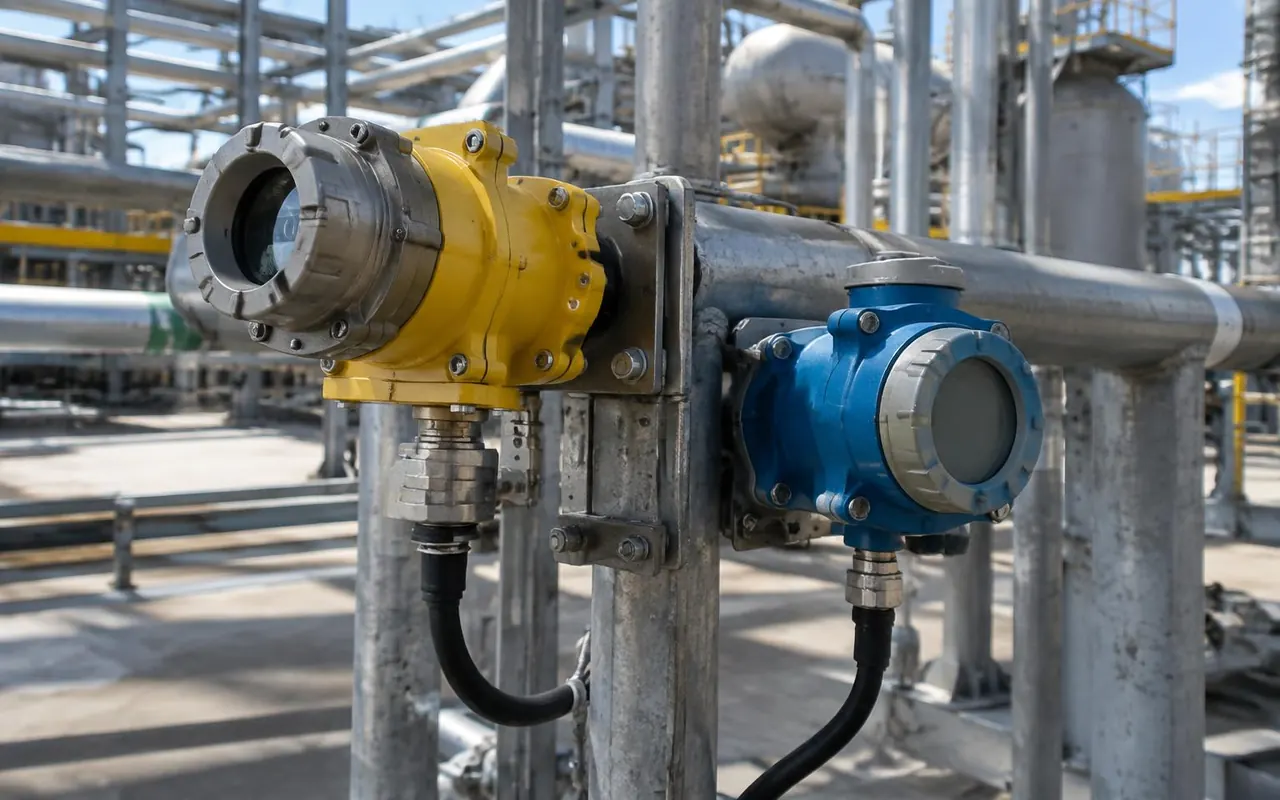
What a fire gas system does
A fire gas detection system forms part of a site's safety control and monitoring system. It monitors areas for abnormal conditions linked to fire and gas risks. Detection identifies a risk, while suppression acts to control a fire. A fire alarm system provides a warning when fire conditions are detected, and the gas-based fire suppression system discharges gas when there is a fire risk. The stated fire control time is under 10 seconds.
Why gas instead of water
Water damages servers, switchgear, archives and process equipment, and cleaning up after a sprinkler discharge can cost more than the fire. A gas system puts the fire out without wetting the room, so the business can restart sooner. That is why data centres, control rooms and sensitive plants use gas for their most valuable spaces.
Where fire gas systems are used
Fire gas systems are commonly used for fire protection and gas detection in these places:
- Chemical industries
- Oil sector facilities
- Data centres and server rooms
- Marine applications
- Industrial sites where liability is high
Choosing the right gas
The gas decides how safe the system is for people and for equipment. We work with the options on these pages:
- FM-200 systems, a clean agent used for occupied rooms such as server rooms
- CO2 flooding systems, used where people are not present or are cleared before discharge, since CO2 in high concentration is dangerous to life
What a good design needs
A gas system works only if the room is designed for it. The room must hold the gas long enough to put out the fire, so doors, dampers and cable openings are sealed or closed on alarm, and the quantity of gas is calculated from the room volume. We check all of this on the site visit and set the actions out in a cause-and-effect chart. Detection and discharge are linked to the fire alarm panel, with a delay and a pre-discharge alarm so people can leave.
What you get from Essatech
We supply, install and service fire gas systems, and the job covers:
- A site visit to measure the room, check openings and review the risk
- A choice of gas and the quantity calculated for the room
- Supply and installation of cylinders, pipework, nozzles and detection
- Links to the alarm panel, door and damper controls
- Testing and handover, and service visits afterwards
Testing and upkeep
A gas system that is not looked after may fail when it is needed. At each service visit we check cylinder weight or pressure, the discharge and control lines, the detectors and the links to the alarm panel, and we confirm that the room is still sealed as designed. If a wall is cut or a new cable goes through the room, the sealing and the gas quantity are reviewed, because changes to the room change how the system behaves.
Why buy from Essatech
Essatech has been in business for more than 15 years and works as a turnkey contractor in fire safety and security. Its licensed team has 80 years of combined experience, and one team handles the survey, supply, installation and service, so you do not coordinate separate contractors for the gas, the detection and the alarm.
For builders, architects, MEP consultants, corporates, industries, hospitals and defence
Industries with process and control rooms, and commercial building owners with data centres, are the main users. Builders and architects should plan the room for gas from the start: sealed walls, dampers that close on alarm and cable openings that can be fire-stopped. Hospital owners use gas systems for IT and records rooms, where water would do more damage than the fire. MEP consultants can send the room drawings and we return agent quantity and sealing requirements. Corporates protect data centres and network rooms. Defence sites, including Navy and Army communication, control and record rooms, use gas protection, and we quote within their security and vendor-registration rules.
What decides the cost
Prices vary widely, so a number without a site visit is a guess. The cost depends on:
- Room volume, which sets the amount of gas
- The type of gas and the number of cylinders
- Detection and control equipment
- How well the room is sealed, and any work needed to seal it
What to send us for a quote
Share these through the quote page or on WhatsApp:
- Room dimensions, including ceiling height
- What is inside the room and how many people use it
- Door, vent and cable openings you know about
- Your existing alarm panel, if any, and your location
Fire gas systems in Hyderabad and Visakhapatnam
We work with data centres and offices in Gachibowli, Hitech City and Madhapur, process plants in Jeedimetla and Patancheru, and marine and industrial sites around Visakhapatnam. Contact our offices to discuss your site.
Talk to our local team
Share your location, type of building and what you need. We will suggest the right equipment and explain installation and maintenance.