

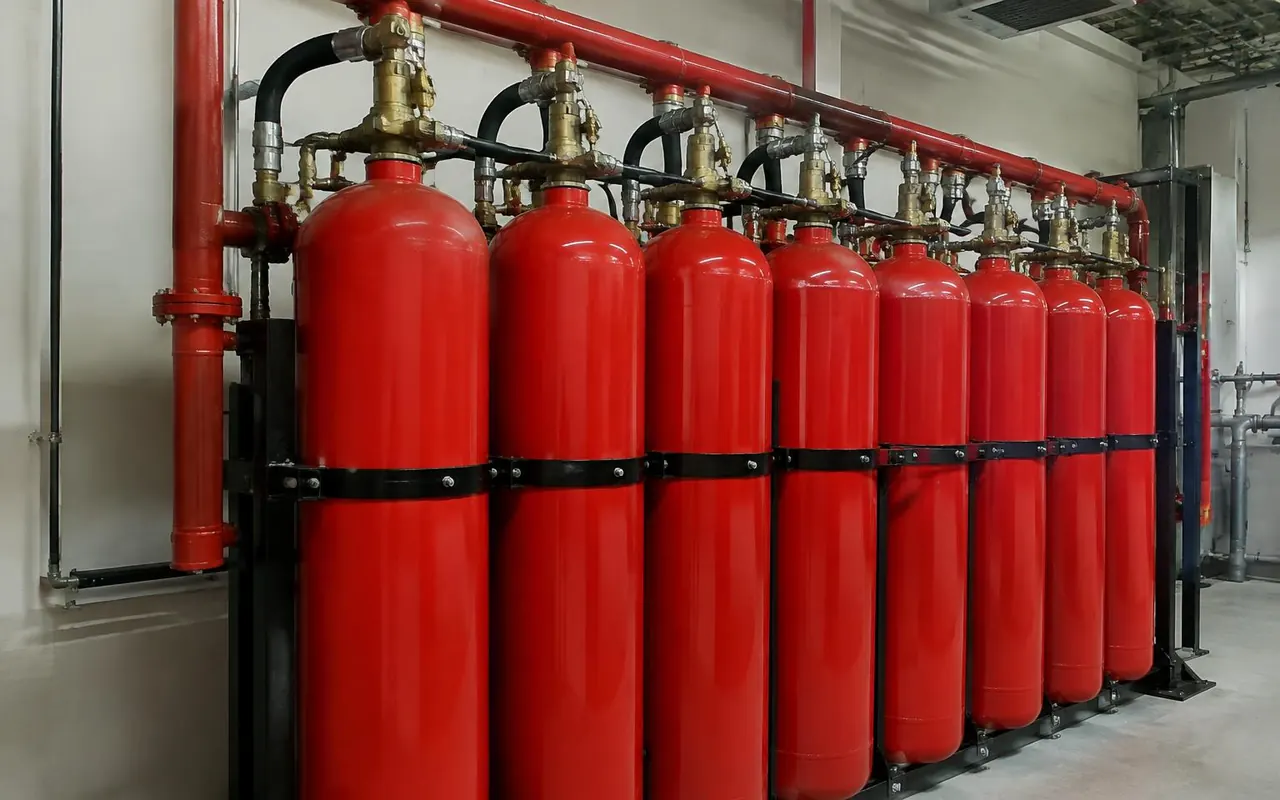
How a CO2 flooding system works
A CO2 flooding system uses carbon dioxide as the fire-extinguishing agent. When released, the gas expands and reduces the oxygen available to the fire. CO2 is effective for a range of fire hazards, but exposure during discharge can be dangerous because it reduces oxygen levels. That is why these systems are designed with alarms and delays, and used where people can be kept clear. Essatech supplies, installs and services CO2 flooding systems in Hyderabad and Visakhapatnam, including automatic CO2 flooding systems, fixed CO2 fire-fighting systems and gas suppression systems.
System design and gas supply
The system is designed to suit the site conditions and the importance of the data or materials that need protection. The number of CO2 cylinders depends on the location being protected. Gas is routed under pressure through mild steel (MS) pipes and tubes. Essatech supplies CO2 gas and also offers FM200 flooding systems. The choice of fire suppression system depends on the hazard. Foam flooding is used for petroleum products, while CO2 flooding may be used for electrical fires depending on the circumstances.
Panel-operated release
A CO2 flooding system can operate through a panel or a fire trace tube. In a panel-operated system, fire or smoke detection triggers the release of CO2 through a solenoid valve. The fire alarm panel controls the release in response to detection, after a pre-discharge alarm and a delay that give people time to leave.
Fire trace tube: release without a panel
A fire trace tube connects to the extinguisher cylinder. It has a closed end and is kept under high pressure. When exposed to fire, the tube expands and bursts at the hot spot, and this releases the gas to control the fire. It needs no electricity or detector, which makes it useful for small enclosures, remote equipment and vehicles.
Where CO2 flooding and fire trace systems are used
CO2 flooding systems are used to protect capacitor banks, cable trays and ducts. Fire trace applications also include:
- Automobiles
- Capacitor banks
- Industries
- Ships
- Battery banks
- Cable and label trays
What you get from Essatech
We supply, install and service CO2 systems as a complete job:
- A site visit to measure the hazard and check how well it can be sealed
- Cylinder count, pipework and nozzle design for the room
- Supply and installation of cylinders, pipes, valves and nozzles
- Linking to the alarm panel, with pre-discharge alarm and delay where people can enter
- Testing and handover, with refilling and service afterwards
Safety comes first
A CO2 discharge can be dangerous to anyone inside. We design for safety with a pre-discharge alarm, a time delay, door signs and lock-off valves for maintenance, and we advise a clean agent instead where people work in the room.
Testing and upkeep
A CO2 system must be ready on the day. At each service visit we weigh or check the cylinders, test the release mechanism and the alarm and delay, inspect pipework and nozzles for damage or blockage, and confirm the door signs and lock-off valves are in place. A cylinder that has lost gas is refilled, so the system always holds its full design quantity.
For builders, architects, MEP consultants, corporates, industries, hospitals and defence
Industries with cable galleries, battery rooms, capacitor banks and switchgear are the main users, because people are rarely inside. Builders and architects should show these rooms with their openings, so we can plan sealing and a safe exit with door signs. Commercial building owners and hospital owners with electrical rooms should use CO2 only where nobody works, and choose a clean agent elsewhere. MEP consultants can share the electrical room drawings and we calculate cylinders and pipework. Corporates use it in unoccupied electrical areas. Defence sites, including Navy and Army power plants, generator rooms and cable galleries, use CO2, and we quote within their security and vendor rules.
What decides the cost
A CO2 quote depends on:
- Hazard volume, which sets the amount of gas and the number of cylinders
- The length of pipework and the number of nozzles
- Panel or fire trace tube operation
- Sealing work and the alarm links
What to send us for a quote
Share these through the quote page or on WhatsApp:
- A layout or photos of the equipment to be protected
- Dimensions of the room or enclosure
- Whether people enter the area
- Existing alarm panel, and your location and target date
Local service
We serve industrial and power sites in Jeedimetla, Patancheru and Bachupally in Hyderabad, and Gajuwaka, Autonagar and Parawada in Visakhapatnam. Contact our offices to book a site visit.
Talk to our local team
Share your location, type of building and what you need. We will suggest the right equipment and explain installation and maintenance.