

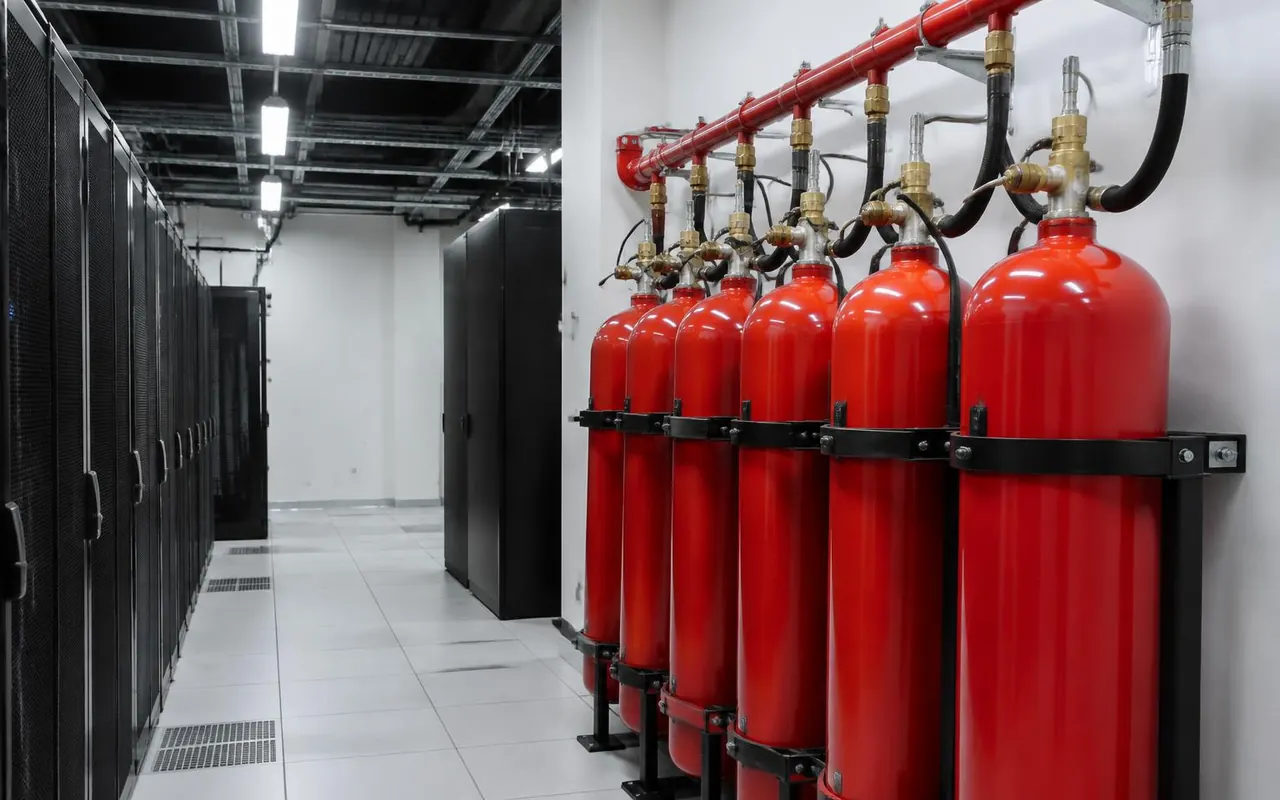
Servers, drives and records do not survive water. An FM200 fire suppression system puts the fire out with a gas that leaves the equipment dry, so a room can often return to work within hours of an incident.
This page covers what the system is made of, how it is specified and where it fits. It sits under our fire suppression systems hub, and city pages follow below.
How an FM200 system works
Detectors in two zones sense smoke. When both confirm a fire, the release panel sounds a pre-discharge alarm and starts a short delay. Cylinders then release the agent through nozzles, and it fills the room in about ten seconds.
FM200 absorbs heat from the flame and interrupts the burning reaction. A sealed room holds the gas for a set soak period so the fire cannot restart. Everything works with your fire alarm system and can be tied into the building alarm.
What goes into the specification
We size and specify each fm200 fire suppression system from the room, not from a catalogue:
- Item
- Agent quantity
- What we decide
- Set from room volume, ceiling height and what the room holds
- Item
- Cylinders
- What we decide
- Number, size and position, with space for service access
- Item
- Nozzles and pipework
- What we decide
- Layout that mixes the gas evenly in the room and the voids
- Item
- Detection
- What we decide
- Two zone smoke detection, with aspirating detection where early warning matters
- Item
- Room sealing
- What we decide
- Door closers, dampers and sealed cable openings, checked by a door fan test
- Item
- Venting
- What we decide
- Pressure relief vent sized for the discharge
- Item
- Controls
- What we decide
- Manual release, abort switch and lock-off for maintenance
Where FM200 is used
FM200 suits rooms where water or powder would cause more damage than the fire:
- Data centres, server and network rooms
- UPS and battery rooms
- Control rooms and telecom exchanges
- Archives, libraries and record rooms
- Laboratories and clean rooms
- Marine and industrial control spaces
Safety and the environment
At design concentration the agent is below its no observed adverse effect level, so it is used in occupied rooms. HFC-227ea has a high global warming potential, and HFCs are being phased down under the Kigali Amendment. Our FM200 vs Novec 1230 guide compares it with a lower warming option.
Brands and approvals
We supply and install Ansul, Rotarex, Siemens, Safepro and Swastik. Essatech supplies FM Approved and UL listed systems and components. Approvals belong to specific models, so we share the FM or UL listing for the exact model we quote.
Service after handover
Gas systems need agent quantity and pressure checks at least every six months, plus a yearly check of the room and a repeat integrity test when the room changes. Our fire suppression maintenance contract schedules the visits and gives you written reports.
Standards and approvals
Designs follow NBC 2016 Part 4, with NFPA 2001 and ISO 14520 as the references for clean agent systems. The fire department issues the NOC. Essatech prepares drawings and records and does not issue or promise approval.
How the work runs
- Send room detailsShare plans, room sizes and what each room holds.
- Survey and designOur engineers visit, check the room for gaps and draft the design.
- InstallationOur own team fits cylinders, pipes, detection and controls.
- Test and hand overWe run alarm, release and integrity tests with you present.
Brands we supply
- Brand
- Siemens
- How we work with it
- We supply and install this brand
- Brand
- Rotarex
- How we work with it
- We supply and install this brand
- Brand
- Ansul
- How we work with it
- We supply and install this brand
- Brand
- Safepro
- How we work with it
- We supply and install this brand
- Brand
- Swastik
- How we work with it
- We supply and install this brand
What to send us
- Room dimensions and ceiling height
- What the room holds and whether people work in it
- Doors, ducts and cable openings
- Fire alarm panel make and model