

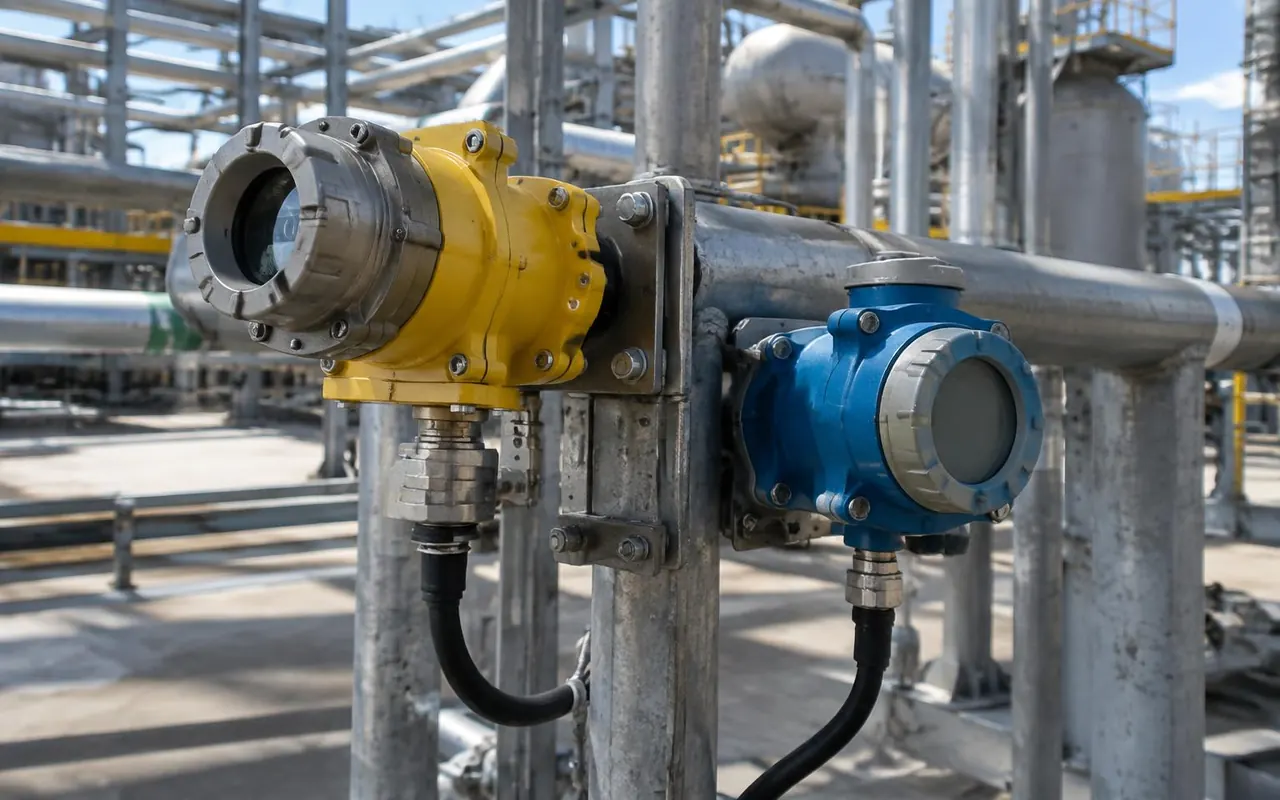
What a flame proof MCP does
A person presses the MCP push button to activate the fire alarm system during a fire emergency. In a hazardous area an ordinary call point could be a source of ignition, so the flame proof version sits in an enclosure built to contain any internal spark. The unit is easy to install and simple to use, and it raises the alarm in the same way as any other call point, so nobody needs training to operate it.
Why detectors alone are not enough
Detectors react to what a fire produces, but a worker often sees trouble first: a leak that ignites, a spill near a hot surface, a smouldering motor. A manual call point gives that person a way to raise the alarm in seconds instead of waiting for a detector to respond. In fast-moving solvent or fuel fires, those seconds matter, which is why hazardous plants fit call points along every exit route.
Where we fit flame proof manual call points
Flame proof manual call points are used in hazardous locations within industrial areas, commercial areas and shopping complexes. Petrochemical industries are a specific application. Typical locations are:
- Petrochemical and fuel handling areas
- Solvent, paint and chemical stores
- Pharma and process plant floors
- Gas storage and compressor areas
- Hazardous stores inside commercial premises and shopping complexes
Checks to make before you buy
Prices vary widely, and so does the quality of paperwork. Before you order from us or anyone else, check these points:
- The approval certificate of the model, such as PESO, and the gas group and zone it covers
- The enclosure rating against dust and water at your site
- The cable entry, since the enclosure protects only with matching certified glands
- Whether it suits your panel: conventional or addressable, and the signal type
What you get from Essatech
We supply, install and service flame proof MCPs with the rest of the alarm in mind:
- A site visit to see the hazardous zones and the escape routes
- The right unit for your gas group, zone and panel
- Installation with certified glands and sealing
- Connection to your panel and an alarm test at handover
- Service visits that check enclosures, seals and wiring
Placing call points where people will find them
Call points go at exits and on escape routes, within a short walk from any point of the area, at a height anyone can reach. In hazardous plants we place them close to the exits, so a person never has to walk through the hazard to raise the alarm. A call point does little without a sound, so we pair it with flameproof hooters and the matching flameproof smoke detectors on the same fire alarm panel.
Testing and upkeep
Hazardous-area call points must stay in the condition they were approved in. At each service visit we operate every call point with its test key, check that the cover and bolts are intact, that glands are tight and sealed, and that the alarm shows on the panel. Regular fire drills help too, because they show whether people can find and reach the call points. A cracked cover is replaced, not patched, since it can cancel the protection of the enclosure.
For builders, architects, MEP consultants, corporates, industries, hospitals and defence
Industries are the main users, with call points at each exit of hazardous areas. Builders and architects of plants should mark exits and escape routes on the hazardous area drawing, so call points sit where people will pass. Commercial building owners with fuel or solvent stores, and hospital owners with chemical or fuel stores, should use approved call points in those rooms too. MEP consultants can share hazardous area drawings and we place call points on the exits. Corporates need approved call points in fuel and generator rooms. Defence sites, including Navy and Army fuel installations and stores, need approved call points, and we quote within their security and vendor-registration rules.
What decides the cost
Four things set the total:
- Approval level, gas group and zone rating
- The number of call points, which follows the layout and exit routes
- Cable, glands and armoured conduit
- Panel type and signal compatibility
What to send us for a quote
Share these through the quote page or on WhatsApp:
- Plant layout with exits marked
- Hazardous area classification, if you know it
- Make and model of your control panel, if any
- Your location and the date you need the work done
Hazardous-area call points in Hyderabad and Visakhapatnam
We serve industrial clusters such as Jeedimetla, Patancheru and Bachupally in Hyderabad, and Gajuwaka, Autonagar and Parawada in Visakhapatnam. Contact our Hyderabad and Visakhapatnam offices to discuss your site's requirements.
Talk to our local team
Share your location, type of building and what you need. We will suggest the right equipment and explain installation and maintenance.