

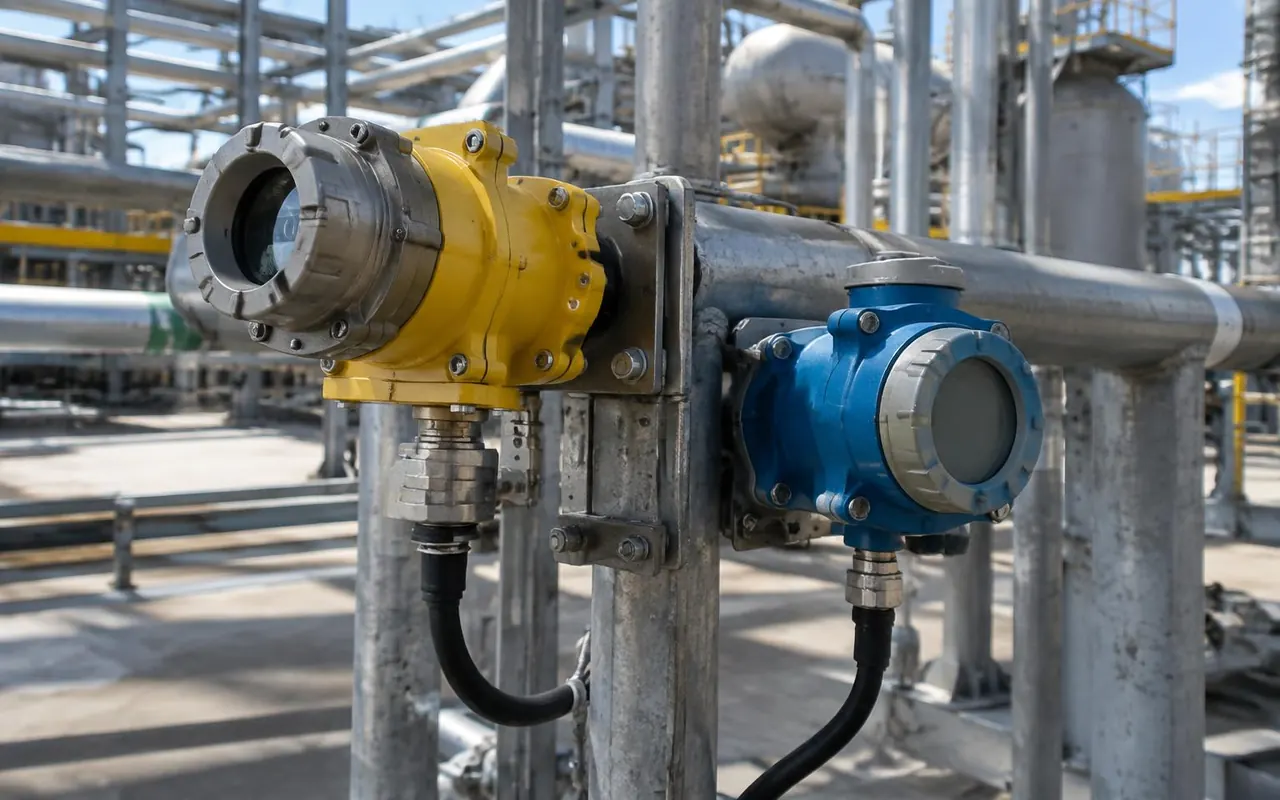
What a flame detector does for your plant
A flame detector looks straight at the fire. Its optical sensors respond to the radiation a flame gives off, so it can sense a flame and send an alarm for the affected area in a fraction of a second, without waiting for smoke to rise or the air to heat. Outdoors, where wind carries smoke away, it keeps working because it does not depend on smoke. In industrial furnaces it responds faster and more accurately than smoke or heat detectors.
Three sensor types are common: ultraviolet (UV), infrared (IR) and UV/IR, which asks for both signals before it alarms. Our range includes industrial flame detectors, intelligent flame detectors and flame sensors, connected to a fire alarm control panel.
Where we install flame detectors
Petrochemical plants and industrial furnaces are the classic sites, but the same detectors protect many others:
- Petrochemical and fuel handling areas
- Industrial furnaces and burner lines
- Hydrogen stations
- Gas-fuelled cookers in large kitchens
- Industrial heating and drying systems
- Industrial gas turbines
- Parking buildings and warehouses
- Waste disposal facilities
- Tall halls and other large public buildings
From alarm to fuel shut-off and suppression
The alarm does not have to stop at a hooter. When the detector is linked to the fuel supply controls, it can stop fuel pumping, and it can release the fire suppression system so the fire is dealt with at its source. We set these actions out in a cause-and-effect chart with your plant team before wiring.
Where flammable gas or vapour is present, hooters and call points must also suit the area. We supply flameproof hooters and flameproof manual call points for such sites.
What you get from Essatech
Every plant is different, so the work starts with a visit. It covers:
- A site visit and a review of your process, fuels and hazards
- Choice of UV, IR or UV/IR detectors and a coverage plan for each area
- Supply, mounting and wiring
- Links to your panel, fuel shut-off and suppression, as agreed
- Commissioning with a test lamp made for the model
- Maintenance and yearly checks, if you want them
For builders, architects, MEP consultants, corporates, industries, hospitals and defence
Industries are the main buyers: fuel bays, furnaces, hydrogen and gas areas and solvent stores. Builders and architects of process plants should place flame detectors at the design stage, with clear lines of sight and no pipework in the cone of vision. Commercial building owners need them only in plant and fuel areas, such as a generator yard, and hospital owners only in fuel and boiler areas, where approved equipment matters. MEP consultants can share the hazardous area drawings and we match detectors to the zones. Corporates need them only in fuel and generator areas. Defence sites, including Navy and Army depots and fuel installations, need approved flame detection in fuel areas, and we quote within their vendor-registration rules.
What decides the cost
Prices for flame detectors vary widely, from basic UV units to intelligent UV/IR models for hazardous areas, so a number without a site visit is a guess. These factors set the total:
- Detector type: UV, IR, UV/IR or intelligent
- Hazardous-area enclosure and approvals, where the site needs them
- The number of detectors, since each one sees a cone and the area decides how many you need
- Links to fuel shut-off and suppression, and the cable run to your panel
What to send us for a quote
Send us what you have through the quote page or on WhatsApp:
- Plant layout or a sketch of the area to protect
- The fuels, gases or solvents handled
- Hazardous area classification, if you know it
- What should happen on alarm: hooters, fuel shut-off, suppression
- Make and model of your existing panel or PLC, if any
Reliability after installation
Oil film or dust on the lens blocks the view, so the window needs cleaning on a schedule that suits the site. Welding arcs, sunlight on shiny surfaces and hot machinery can trip single-sensor detectors, which is one reason UV/IR types are popular. Include flame detectors in your yearly fire safety audit or maintenance visit.
Flame detection for industry in Hyderabad and Visakhapatnam
Industrial clusters such as Jeedimetla, Patancheru and Bachupally in Hyderabad, and Gajuwaka, Autonagar and Parawada in Visakhapatnam, have fuel, solvent and furnace areas that need fast detection. Contact our offices to book a site visit.
Talk to our local team
Share your location, type of building and what you need. We will suggest the right equipment and explain installation and maintenance.